What to Look for When Buying a Used RV
The single biggest thing to check when buying a used RV is water damage, since a small roof leak can quietly destroy floors, walls, and structural framing long before it's visible. Beyond that, a thorough inspection of tires, appliances, electrical systems, and paperwork separates a smart purchase from an expensive mistake.
At Sky River RV, our team inspects and reconditions every used unit before it hits the lot, and we walk buyers through exactly what to check whether they're shopping with us or elsewhere. Here's the complete checklist we use.
The Short Answer: Prioritize Water Damage First
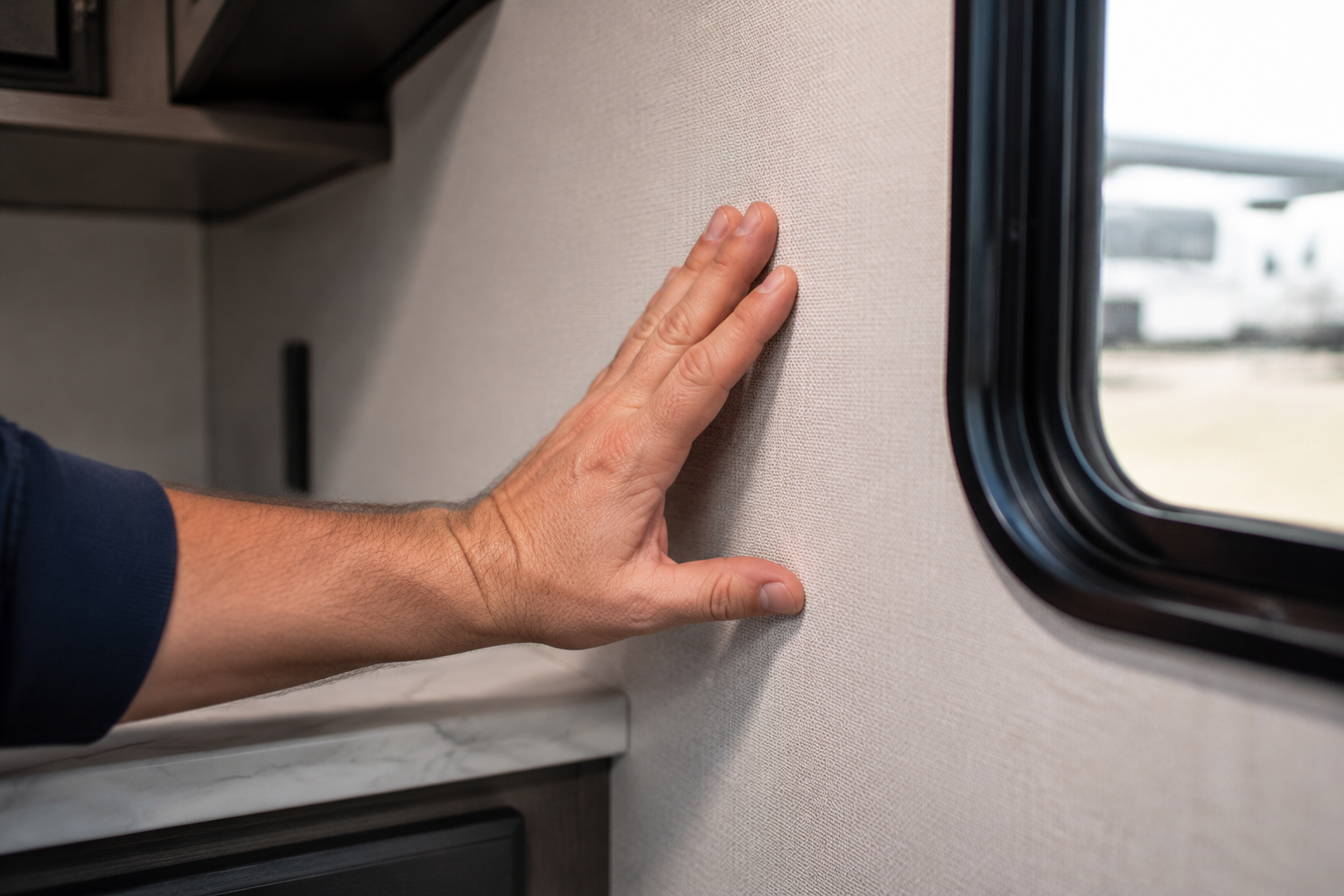
Water intrusion is the most common and most expensive problem in used RVs, and it's often hidden behind walls, under flooring, or inside storage bays. Before checking anything else, look for:
Brown staining or bowing on ceilings and walls
Soft, spongy, or uneven flooring, especially near the kitchen and bathroom
Musty odors inside cabinets and storage compartments
Cracked, missing, or blackened caulk around roof seams and windows
Exterior Inspection Checklist
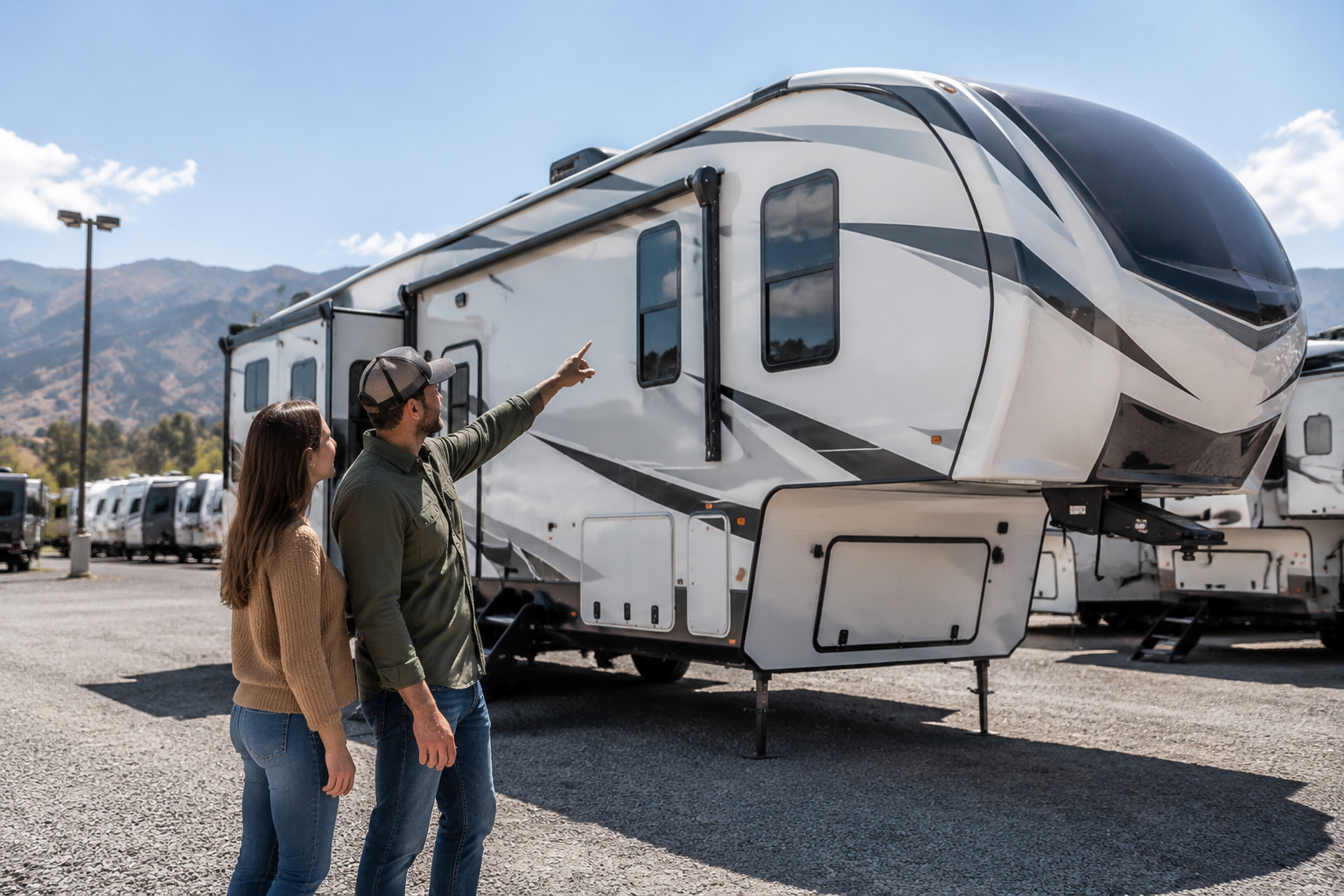
Walk the full perimeter of the RV slowly, checking these areas one at a time:
Roof: look for cracked sealant, soft spots, and separation around vents or air conditioning units
Walls and siding: check for delamination, which shows up as small bubbles, cracks, or a wavy panel surface
Windows and slide-outs: inspect seals for gaps or dried-out rubber that could let water in
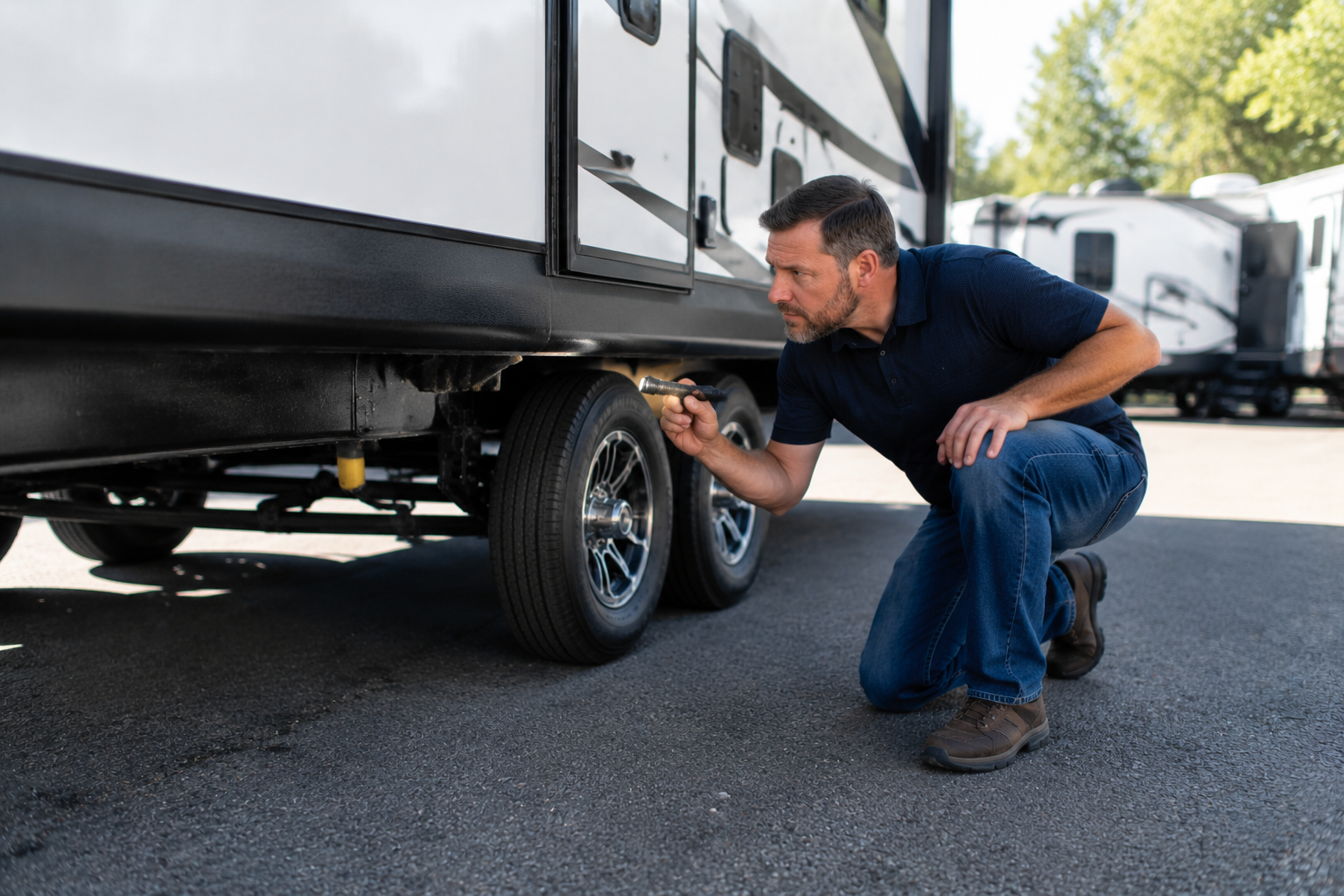
Tires: check tread depth and the manufacture date code (a 4-digit number on the sidewall), since tires over 5 years old are a concern even with good tread
Undercarriage: look for rust, damaged tanks, or loose components
Interior Systems to Test in Person
Never take a seller's word that "everything works." Test each system yourself, at the RV, before making an offer:
Electrical: flip every light switch, test outlets, and check that the converter and battery hold a charge
Plumbing: run every faucet, flush the toilet, and check under sinks for active or past leaks
Propane appliances: light the stove, oven, and furnace; a rattling furnace can mean debris buildup, while squealing suggests worn bearings
Refrigerator: run it on both electric and propane modes to confirm it actually cools
Air conditioning and furnace: run a full cycle and listen for unusual noises
Questions to Ask the Seller or Dealer
A used RV's history matters as much as its current condition. Always ask:
Do you have maintenance and service records?
Has the RV ever had water damage or been in a collision?
Is the title clean, with no salvage or rebuilt history?
Does the VIN on the title match the VIN on the unit?
How was the RV primarily used and stored (full-time, seasonal, covered, outdoors)?
Why a Professional Inspection Still Matters
Even an experienced buyer can miss issues that only show up under specialized testing, like moisture meter readings inside walls or a pressurized water system leak test. Many buyers hire an RVIA-certified independent inspector after choosing a specific unit but before signing final paperwork, which typically costs a few hundred dollars and can prevent thousands in surprise repairs.
Red Flags That Should Make You Walk Away
Certain issues are dealbreakers, not negotiation points:
Extensive soft spots across multiple areas of the floor or walls
A title marked salvage, rebuilt, or flood-damaged
A seller who refuses to allow a pre-purchase inspection
Missing or heavily edited maintenance records with unexplained gaps
Strong musty odor that doesn't clear after airing out the unit
The Dealer Advantage
Buying used through a reputable dealership adds a layer of protection private-party sales simply can't match. Reconditioned units typically come with a pre-delivery inspection, documented service history, and staff who can walk you through exactly what was repaired before it hit the lot.
Bottom Line for Used RV Buyers
Take your time, bring a flashlight and moisture meter if you have one, and never skip the questions about title and service history, no matter how good the RV looks on the surface. A used RV that's been properly inspected and maintained can offer years of reliable travel at a fraction of the cost of buying new.