

What Does RV Stand For? A Beginner's Guide to Recreational Vehicles
RV stands for Recreational Vehicle — a broad term covering any motorized or towable vehicle built with living quarters for travel, camping, or life on the road. That's the short answer. But the moment you start shopping, you'll discover that "RV" is really an umbrella term for a surprisingly wide range of vehicles — from compact campervans to 45-foot luxury coaches with king beds and full kitchens.
If you're new to the RV world, this guide breaks down what the term actually covers, the key differences between types, and what you should know before setting foot on a dealer lot.
The Full Meaning: Recreational Vehicle
The term "recreational vehicle" dates back to the early 20th century. The first true RV is widely attributed to Roland Conklin's Gypsy Van, a purpose-built 25-foot motor coach completed in 1915, equipped with a generator, fresh water tanks, a shower, folding bunks, and an electric kitchen range. It was described at the time as a "summer cottage on wheels" — a description that still fits the modern RV perfectly.
By the 1950s and '60s, mass production had made RVs accessible to middle-class American families, and the industry has been growing ever since. Today, the RV Industry Association estimates millions of households own an RV across North America — a number that surged significantly during and after the pandemic as remote work and outdoor travel became priorities.
Motorized vs. Towable: The Two Core Categories
Every RV falls into one of two categories: you either drive it or you tow it. This single distinction shapes everything — cost, licensing, towing vehicle requirements, campsite options, and lifestyle fit.
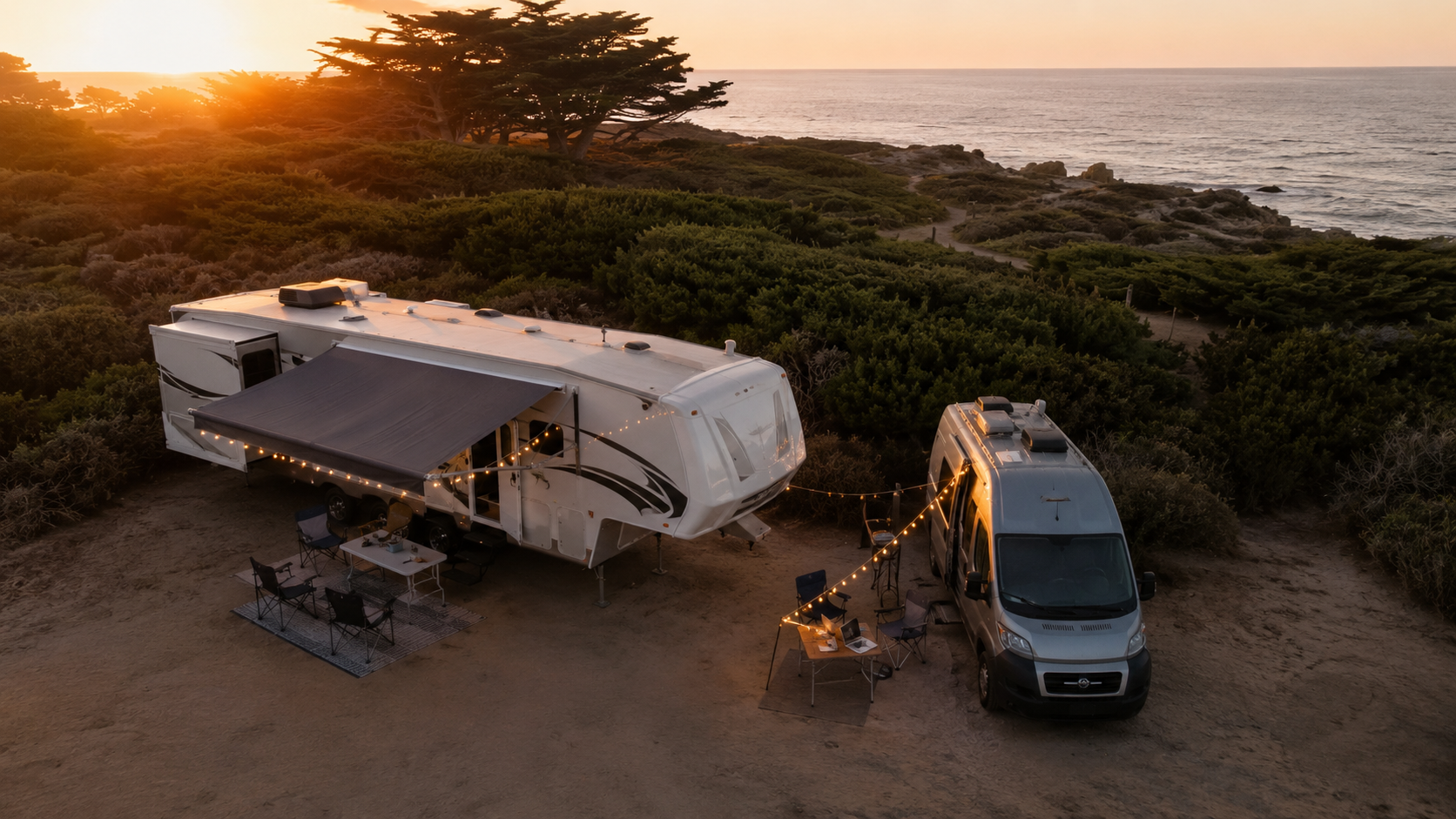
Motorized RVs (Motorhomes)
These have their own engine and drivetrain. You get in and drive. They're divided into three classes:
Class A — The largest motorhomes, typically 25–45 feet. Built on a bus or commercial truck chassis with the most interior space and luxury amenities. Best for full-timers or buyers who want a true home-on-wheels experience.
Class B (Campervans) — The most compact motorized option, usually 16–24 feet, built on a van chassis such as a Mercedes-Benz Sprinter or Ford Transit. Highly maneuverable, better fuel efficiency, ideal for couples and solo travelers.
Class C — A mid-sized option, typically 20–32 feet, built on a truck or van cutaway chassis with a distinctive over-cab sleeping area. A popular balance between livability and driveability.
Most motorized RVs in all three classes can be driven with a standard driver's license — no special certification required in most U.S. states.
Towable RVs (Non-Motorized)
These attach to a separate tow vehicle — usually a pickup truck or SUV. They're generally more affordable than motorized units and are the most common type on the market.
Travel Trailers — The most versatile towable option, ranging from 12 to 35 feet. Hitched to a standard ball mount on any qualifying tow vehicle. Wide variety of floor plans and price points.
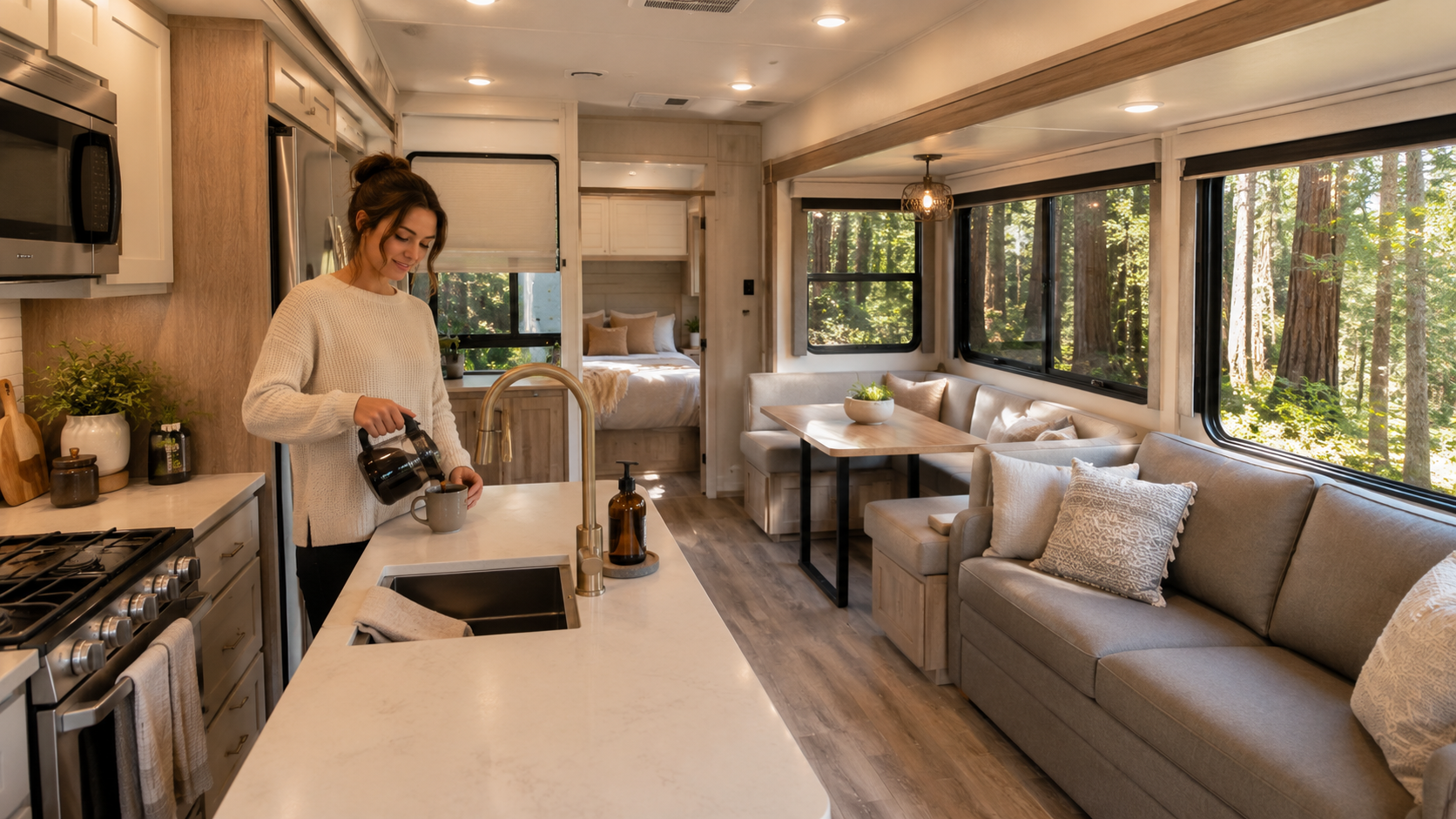
Fifth Wheels — Larger, heavier trailers designed to be towed by a pickup truck using a special in-bed hitch (the "fifth wheel" coupling). Fifth wheels offer more interior height and often include a raised front bedroom loft — a popular choice for couples who full-time.
Pop-Up Campers (Folding Trailers) — Compact, collapsible trailers that expand when parked, ranging from 8–16 feet folded and sleeping 2–8 people. The most affordable entry point into the RV lifestyle.
Toy Haulers — Travel trailers or fifth wheels with a rear garage section designed to carry ATVs, dirt bikes, kayaks, or other recreational equipment. Popular with off-road enthusiasts.
Why the RV Type You Choose Matters More Than the Brand
New buyers often lead with brand questions: "Should I buy a Keystone or a Forest River?" But experienced RVers will tell you to start with the type — because choosing the wrong category means no brand will fix it.
A couple who wants to boondock in national forests needs a different RV than a family of five who wants full hookups at a resort campground. A buyer with a half-ton truck has different options than one driving a dually diesel. Getting the category right first — motorized vs. towable, length, weight class — sets the foundation for everything else.
Sky River RV: California's Multi-Brand RV Destination
Whether you're shopping your first travel trailer or upgrading to a fifth wheel you'll live in full-time, Sky River RV carries a comprehensive lineup of RV types and brands across our California locations — Paso Robles, Pismo Beach, Santa Maria, and Fresno.
Our inventory spans travel trailers, fifth wheels, and Class B campervans from leading manufacturers including Keystone, Forest River, Airstream, Brinkley, Winnebago, Newmar, and PleasureWay. Our team specializes in matching buyers to the right RV category first — before ever talking floor plans or features.
Ready to start exploring? Call us at (805) 226-9292 or browse our current inventory online. If you're not sure what type of RV fits your lifestyle, walk in with your questions — that's exactly where we start every conversation.