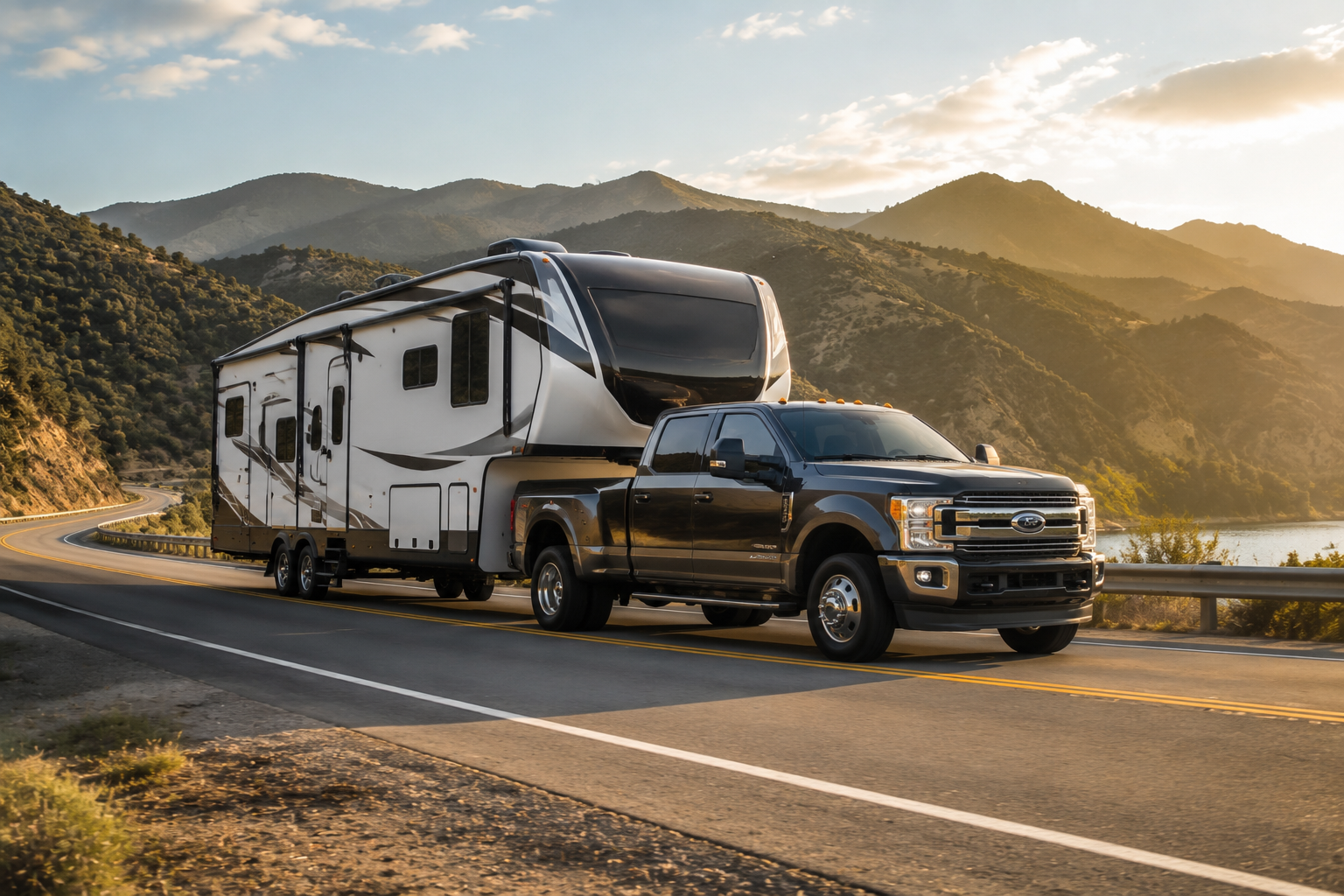
How Much Weight Can You Actually Tow With an RV?
The honest answer: it's not your truck's advertised "max towing capacity" that matters most, it's your payload capacity, and most first-time buyers get this backwards. Here's the math that actually keeps you legal and safe on the road.
At Sky River RV, we walk buyers through weight calculations every single day before they sign for a fifth wheel or travel trailer. The numbers on a window sticker rarely tell the full story.
The Short Answer: Four Numbers Decide Everything
Before you can answer "how much can I tow," you need four figures, not one:
GVWR (Gross Vehicle Weight Rating): max weight of your tow vehicle, fully loaded
GCWR (Gross Combined Weight Rating): max combined weight of truck + trailer + everything in both
Payload capacity: how much weight your truck can carry internally (passengers, gear, tongue weight)
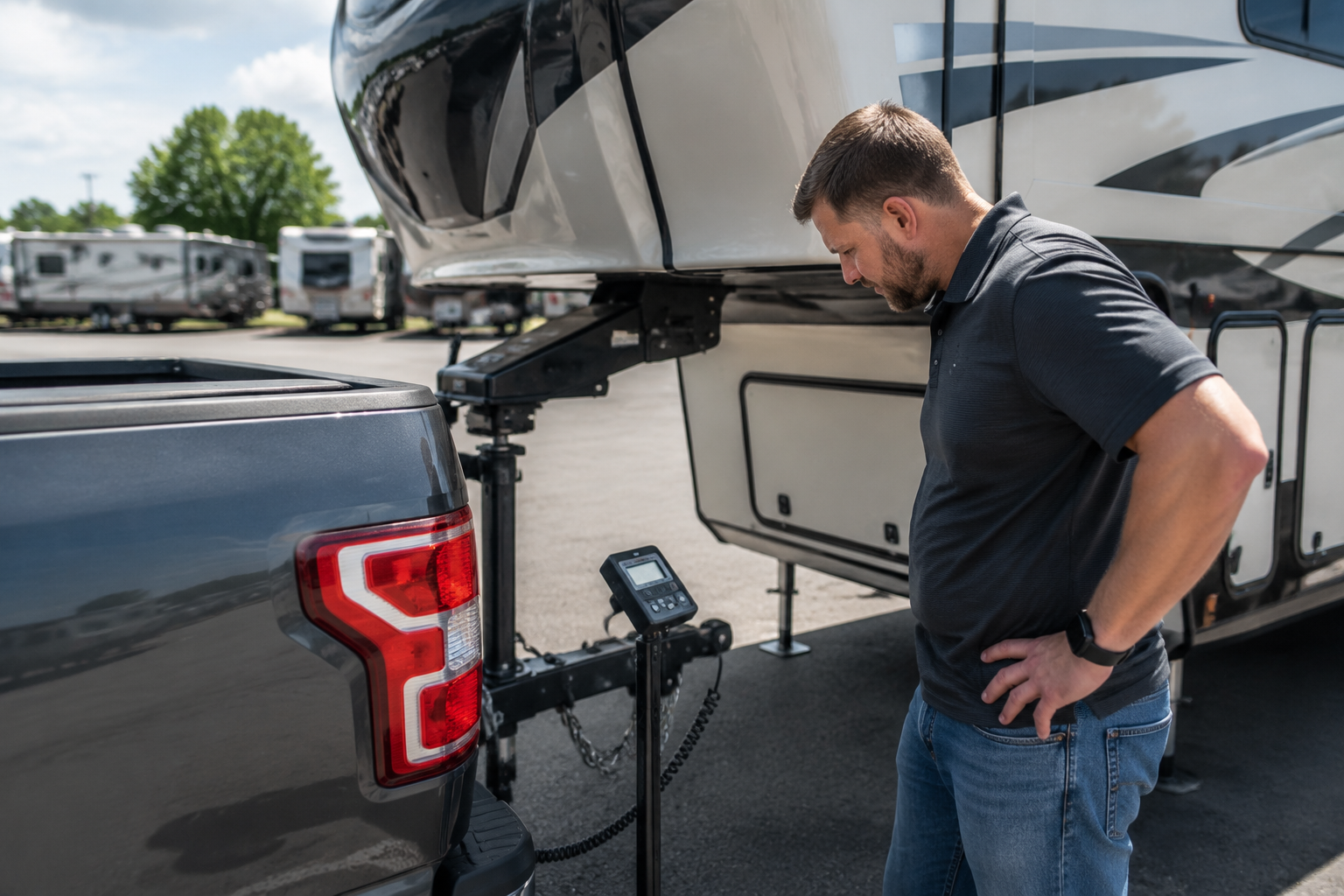
Tongue or pin weight: downward force the trailer places on your hitch, typically 10-15% of trailer weight for travel trailers, 15-25% for fifth wheels
Why "Max Tow Rating" Is Misleading
Manufacturers calculate max towing capacity using a stripped-down truck: no passengers, no fuel, no cargo, sometimes not even a full tank of gas. Once you add your family, camping gear, and a full water tank, your real available capacity shrinks
This is why an "11,000 lb tow rating" truck can still be overweight towing an 8,000 lb trailer, if payload runs out first.
How to Calculate Your Actual Towing Number
Follow this sequence every time you're comparing a truck to a trailer:
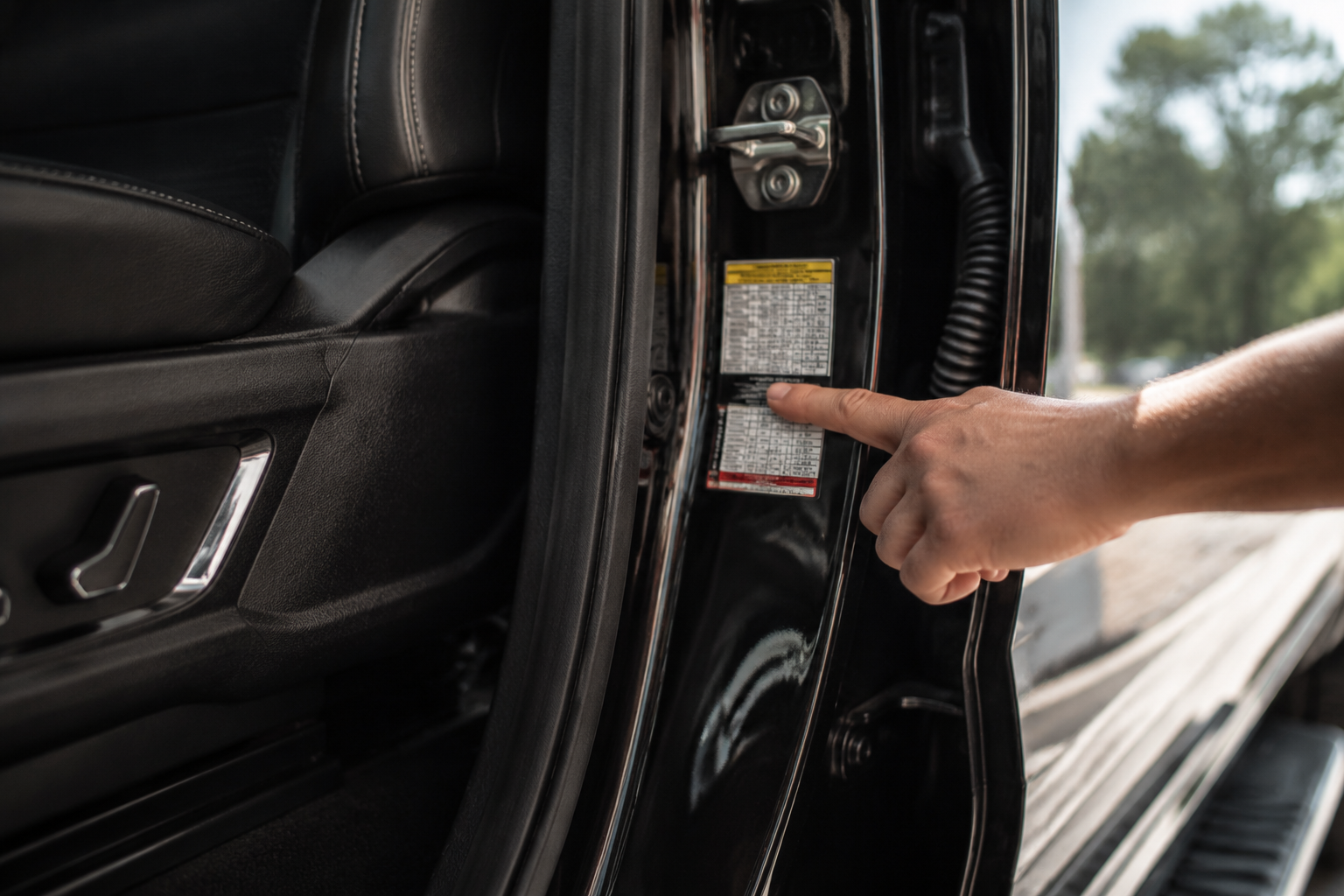
Find your truck's payload capacity (door-jamb sticker, not the tow rating)
Subtract passenger and cargo weight from payload to get available payload
Subtract the trailer's tongue/pin weight from available payload
If the remainder is positive, you have payload headroom
Separately confirm GCWR is not exceeded when adding truck weight + full trailer weight
Typical Weight Ranges by RV Type
Weight varies significantly by RV category, which is why matching truck to trailer matters more than following generic "we can tow anything" sales pitches:
Travel trailers: 2,800 lbs (small, under 22 ft) to 6,700+ lbs (large models) dry weight
Fifth wheels: average 12,700 lbs dry, ranging from 5,000 lbs (compact) to 16,000 lbs (large luxury units), with loaded GVWR often between 17,000-20,000 lbs
Toy haulers: 3,600 to 11,400 lbs dry weight, averaging around 7,600 lbs
Pop-up campers: 1,400 to 4,000 lbs, with GVWR maxing around 4,000 lbs
Motorhomes Have a Different Towing Question
If you own a motorhome and want to tow a car or trailer behind it, the calculation flips: you're now working with GCWR minus your motorhome's loaded weight. Look for the hitch weight rating plate on your motorhome's rear hitch, since this often caps towing lower than the chassis' theoretical maximum.
Common Mistakes Buyers Make
Trusting the advertised tow rating without checking payload
Forgetting tongue weight counts against payload, not just tow rating
Using dry weight instead of loaded weight when calculating totals
Not accounting for a full propane tank, water tank, and cargo when planning a trip
Assuming a bigger truck automatically means more available payload (trim level matters more)
Practical Tip: Weigh It Yourself
If the math feels overwhelming, load your rig exactly as you would for a real trip and drive to a certified truck scale (most CAT scales work). This single step catches overweight setups that spreadsheet math sometimes misses due to unaccounted extras like tools, generators, or extra passengers.
Bottom Line for RV Buyers
Don't shop by "max tow rating" alone. Bring your truck's door-jamb sticker with you when RV shopping, and let our team match you to a fifth wheel or travel trailer that fits your real available payload, not just a marketing number.