

How Much Is an RV? 2026 Price Guide by Type, Class & Budget
The honest answer: an RV can cost anywhere from $10,000 to well over $500,000 — and both extremes represent legitimate, widely available products. That's a range so wide it's almost meaningless on its own. What makes it useful is understanding what drives those numbers and where different types of buyers realistically land.
This guide breaks down pricing across every major RV category, explains what actually moves the price up or down, and covers the ongoing costs that matter just as much as the sticker price.
Why RV Prices Vary So Dramatically
No two RVs are priced the same because no two RVs are built the same. The variables that most directly affect price are:
Type — a compact travel trailer and a full-size Class A motorhome are completely different products with completely different use cases and build costs
New vs. used — a two-to-three-year-old used RV in good condition typically costs 20–50% less than its new equivalentchesacorv+1
Length and weight class — larger units require more materials, more structural engineering, and larger chassis
Features and floor plan — slide-outs, residential appliances, king-sized beds, solar systems, and upgraded HVAC all add cost
Brand positioning — an entry-level Forest River travel trailer and a Newmar luxury diesel pusher serve fundamentally different markets
Start by identifying your RV type first — that one decision sets the entire price range.

Price Ranges by RV Type
Pop-Up Campers and Entry-Level Travel Trailers
The most affordable entry point into RV ownership. Pop-up campers and smaller travel trailers start around $10,000–$20,000 new, making them accessible to buyers who want to test the RV lifestyle without a major financial commitment. They sleep 2–6 people comfortably and tow behind most mid-size SUVs and trucks. The trade-off is limited interior space and minimal amenities.
Mid-Size Travel Trailers
This is where the majority of first-time buyers land — and for good reason. Mid-size travel trailers in the 22–30-foot range offer the broadest selection of floor plans, feature sets, and price points in the industry. Expect to pay $25,000–$60,000 for a new unit from brands like Keystone, Forest River, or Brinkley. You get comfortable living space, kitchen, bathroom, sleeping for 4–6, and often a slide-out or two. Used units in this range frequently sell for $15,000–$35,000 depending on age and condition.
Fifth Wheel Trailers
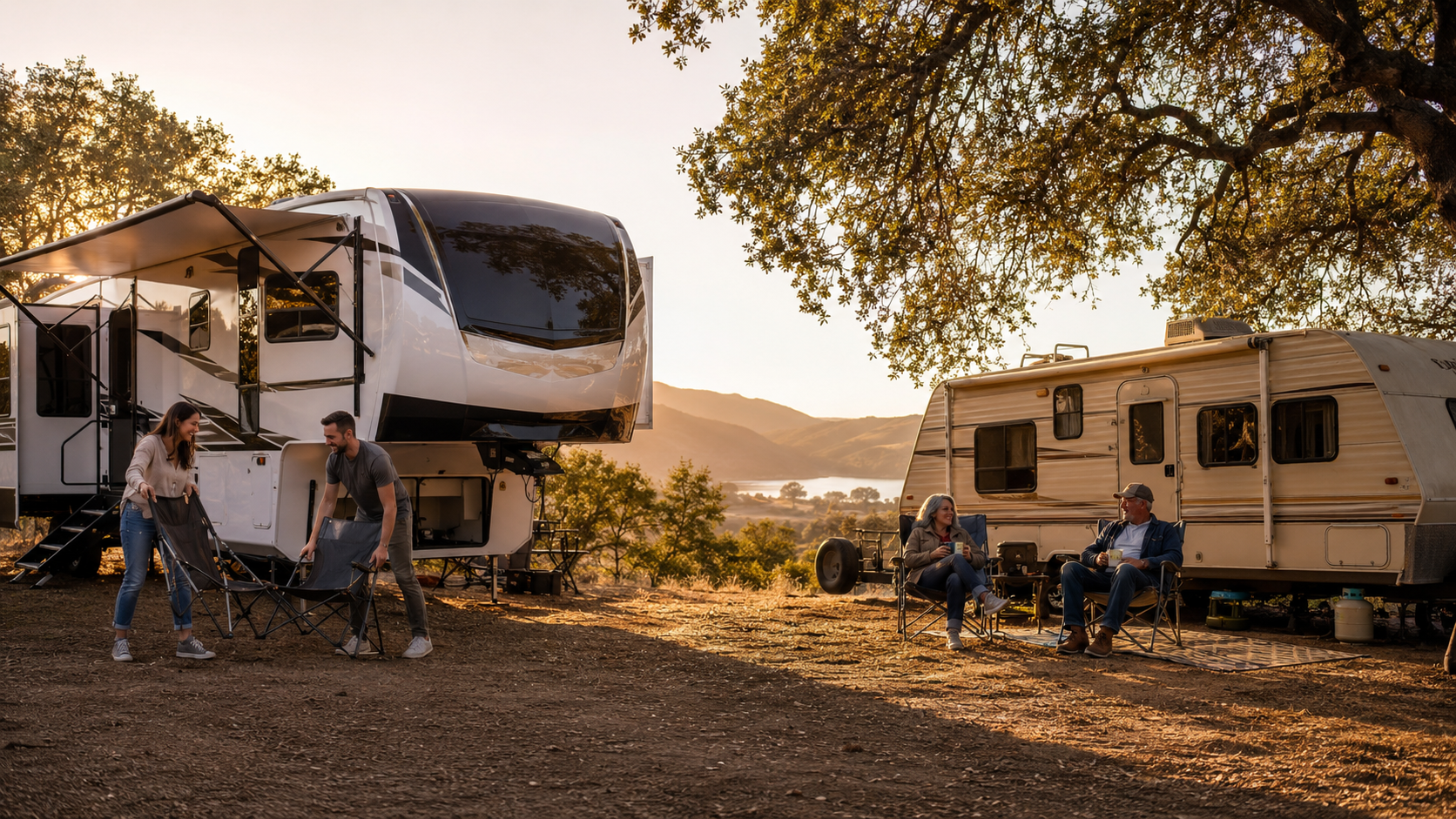
Fifth wheels occupy a sweet spot for buyers who want maximum interior space without the complexity of a motorhome. New units run $40,000–$100,000, with luxury residential-style fifth wheels pushing higher. They require a pickup truck with a fifth-wheel hitch, but deliver unmatched interior volume — high ceilings, front bedroom lofts, and full residential kitchens are standard at mid-range price points. Keystone's Montana fifth wheel line and Brinkley's Model Z are strong representatives of what this category delivers.
Toy Haulers
Toy haulers — travel trailers or fifth wheels with a rear garage section for ATVs, dirt bikes, or other gear — typically run $35,000–$160,000 depending on size, garage capacity, and included amenities. They're a specialized category with a passionate buyer base, and pricing reflects that added utility.
Class B Campervans
Class B vans built on Mercedes-Benz Sprinter or Ford Transit chassis are priced higher relative to their size than any other RV category — typically $80,000–$165,000 new. The premium reflects the quality of the van chassis, the complexity of fitting living systems into a compact footprint, and strong brand positioning from makers like PleasureWay and Winnebago. For buyers who want stealth camping, urban maneuverability, and a premium build, the price is justified. Used Class Bs hold their value exceptionally well.
Class C Motorhomes
Class C units — built on a truck or van cutaway chassis with the distinctive over-cab sleeping area — range from $85,000–$155,000 new. They're the most family-friendly motorized option, offering good living space, easier driveability than a Class A, and a lower price point than luxury coaches. A good entry point for buyers making the jump from towable to drivable.
Class A Motorhomes
Class A motorhomes are the top of the motorized market in both size and cost. Entry-level gas Class A units start around $100,000, mid-tier diesel pushers fall between $150,000–$300,000, and luxury coaches from Newmar or Tiffin can exceed $500,000. They're designed for full-time living or extended cross-country travel — essentially a fully equipped home that drives itself.
The Costs Beyond the Sticker Price
The purchase price is just the beginning. Every RV buyer should budget for these ongoing ownership costs before signing anything.
Sales Tax and Registration
Most states charge 6–10% or more in sales tax on the purchase price — which on a $60,000 fifth wheel means $3,600–$6,000 in tax alone. Registration fees vary by state and RV class.
Insurance
RV insurance typically runs $500–$2,000 per year depending on coverage level, RV value, and how often you use it. Full-time RVers need a more comprehensive policy than weekend campers.
Maintenance and Repairs
Budget $500–$3,000+ annually for routine maintenance — roof sealant, tire replacement, slide-out lubrication, appliance servicing, and the occasional unexpected repair. An extended warranty at time of purchase can absorb much of this risk.
Storage
If you don't have space to store the unit at home, outdoor lot storage runs $50–$100/month, covered storage $100–$300/month, and climate-controlled indoor facilities $250–$500+/month.
Campground Fees
Full-hookup campground sites range from $30–$100 per night in most regions. Full-timers who move frequently need to factor this into their monthly budget alongside fuel.
Fuel
Motorized RVs average 6–12 mpg depending on class and engine. Even towable RVs affect your tow vehicle's fuel economy significantly, often dropping it by 20–35% when pulling a loaded trailer.
New vs. Used: Where the Real Value Decision Lives
Buying new means a manufacturer warranty, current features, and zero mystery about the unit's history. Buying used means paying 20–50% less for a unit that's already broken in — and had any factory defects sorted out by the previous owner.
A solid two-to-three-year-old travel trailer or Class C motorhome, properly inspected by a certified technician, can deliver years of reliable use at a fraction of new pricing. The key phrase is properly inspected — buying used from a dealer with a certified service department gives you professional pre-sale inspection and post-purchase support. Buying from a private party means you're taking on that risk yourself.
What's the Real Monthly Cost of RV Ownership?
Here's a useful framing: a buyer who purchased a $30,000 travel trailer and owned it for five years — including maintenance, insurance, storage, and improvements — came out to a total cost of ownership around $261/month after accounting for the unit's resale value. That's less than the average car payment, for a vehicle that generates an entirely different quality of travel experience.
Find Your RV at Sky River RV
At Sky River RV, we carry new and used inventory across every major category — travel trailers, fifth wheels, and Class B campervans — from brands including Keystone, Forest River, Brinkley, Airstream, PleasureWay, Winnebago, and Newmar. Whether you're working with a $25,000 budget or looking at a luxury diesel pusher, our team at Paso Robles, Pismo Beach, Santa Maria, and Fresno can walk you through real options at real prices — no pressure, no guesswork.
Call (805) 226-9292 or browse our current inventory online to see what's available in your price range today.