Do You Need a Special License to Drive an RV in California?
For most RV owners, the answer is simple: no, you don't need a special license to drive an RV in California, as long as your rig stays under certain weight thresholds. But once your motorhome or towable combination crosses specific weight limits, the rules change fast, and getting caught unlicensed can mean fines, insurance denials, or worse.
At Sky River RV, we walk hundreds of first-time buyers through this exact question every year across our Paso Robles, Pismo Beach, Santa Maria, and Fresno locations. Here's what you actually need to know before you hit the road.
The Short Answer: It Depends on Weight, Not Vehicle Type
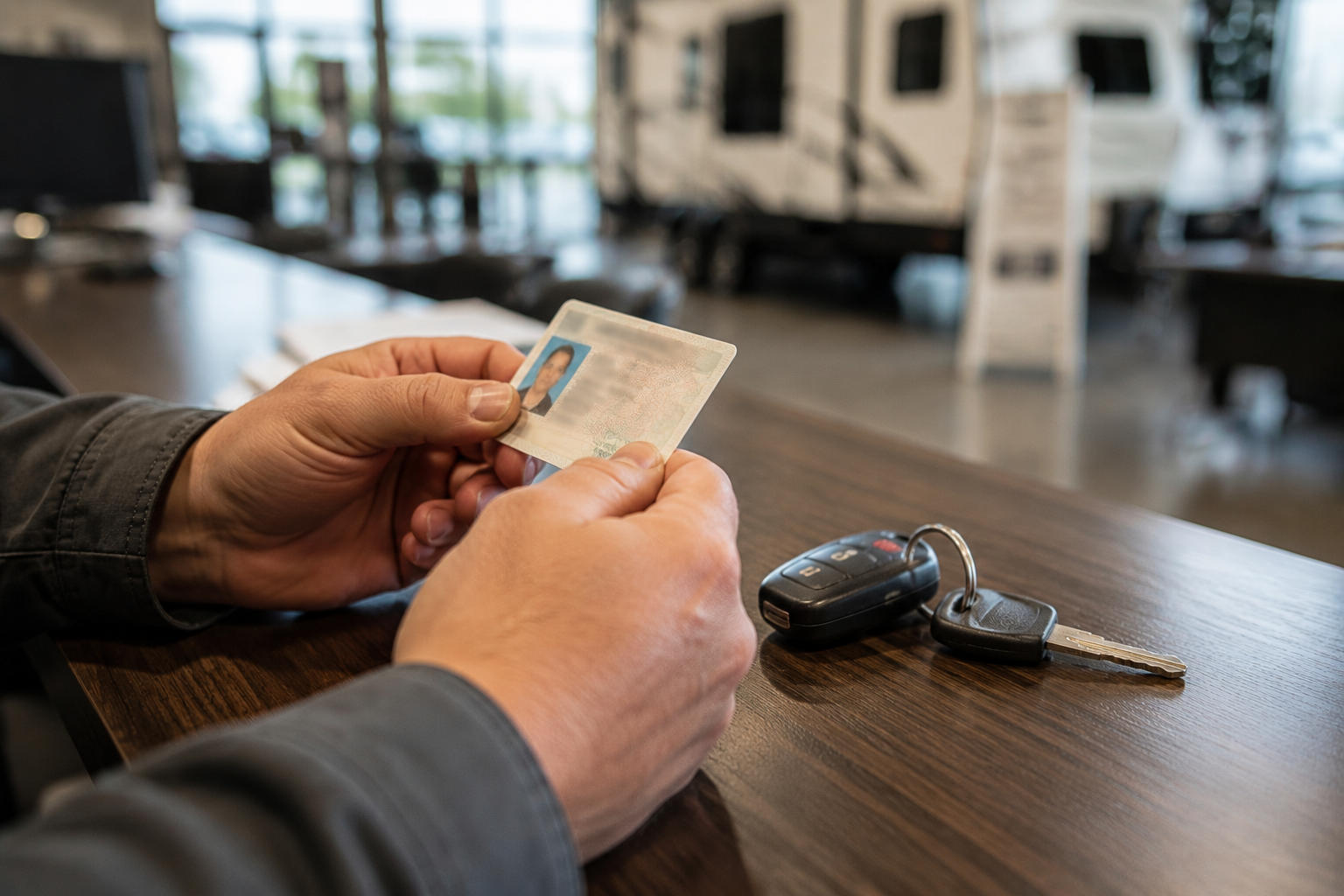
California, like most states, doesn't license RVs based on whether they're a motorhome, travel trailer, or fifth wheel. Instead, licensing requirements hinge almost entirely on Gross Vehicle Weight Rating (GVWR) and, for towables, the combined weight of tow vehicle and trailer.
Here's the breakdown for a standard, non-commercial Class C license (California's regular driver's license):
Motorhomes under 40 feet and under 40,000 lbs GVWR: no special license needed
Travel trailers or fifth wheels under 10,000 lbs GVWR: no special license needed
Combined tow vehicle + trailer weight under 15,000 lbs: standard license applies
Cross those thresholds, and you may need a non-commercial Class B license, which requires a written test and a skills exam, but not a full commercial driver's license (CDL).
When You'll Need a Non-Commercial Class B License
If your RV or tow combination exceeds the weight limits above, California requires a non-commercial Class B license. This typically applies to:
Large Class A motorhomes exceeding 40,000 lbs GVWR
Fifth wheels like the Keystone Montana 3532SP paired with a heavy-duty truck, where combined weight can exceed 15,000 lbs
Toy haulers or bunkhouse trailers with high dry weights towed by full-size trucks
The good news: getting a Class B non-commercial license is far less involved than a commercial CDL. You'll need a written knowledge test covering air brakes (if applicable) and vehicle control, plus a driving skills test in the actual RV or a similar-sized vehicle.
Do You Ever Need a Full CDL for an RV?
Almost never, for personal use. Commercial driver's licenses exist for vehicles used to transport goods or passengers for compensation. Since most RVs are used for personal recreation, they're exempt from CDL requirements even at large sizes, as long as you're not:
Renting your RV out commercially with a hired driver
Using it to transport paying passengers
Operating it under a business registration that classifies it as commercial
State-by-State: Why This Varies
Every state sets its own weight thresholds and license classes, which is why "do I need a special license" trips up so many buyers moving between states or planning cross-country trips:
Texas: requires a Class A CDL for combinations over 26,001 lbs if the towed unit exceeds 10,000 lbs
Nevada: similar structure to California with non-commercial Class B thresholds
Florida: no special license required regardless of RV size for personal use
If you plan to travel outside California regularly, check destination-state DMV rules before your trip, especially with heavier fifth wheels.
Insurance Implications of Licensing
Even if California law doesn't require a special license for your specific RV, your insurance provider may ask about it. Under-licensed drivers involved in accidents can face claim denials or reduced payouts, so it's worth confirming your license class matches your rig's actual weight class, not just what state law technically permits.
Practical Tips Before You Buy
Our sales team at Sky River RV always recommends buyers work backward from their current license before falling in love with a floor plan:
Know your current license class and its weight ceiling
Calculate GVWR (not dry weight) for any motorhome you're considering
Add tow vehicle weight to trailer weight for fifth wheels and travel trailers
Ask your DMV directly if you're within a few thousand pounds of a threshold
This single step prevents the frustrating scenario of financing a beautiful new RV, then discovering you need additional testing before you can legally drive it home.
Bottom Line for California RV Buyers
Most weekend warriors and even many full-time RVers never need anything beyond their standard Class C license. It's the larger Class A motorhomes and heavy-duty fifth wheel setups where licensing rules actually kick in, and our team can help you match the right unit to your current license before you sign anything.