
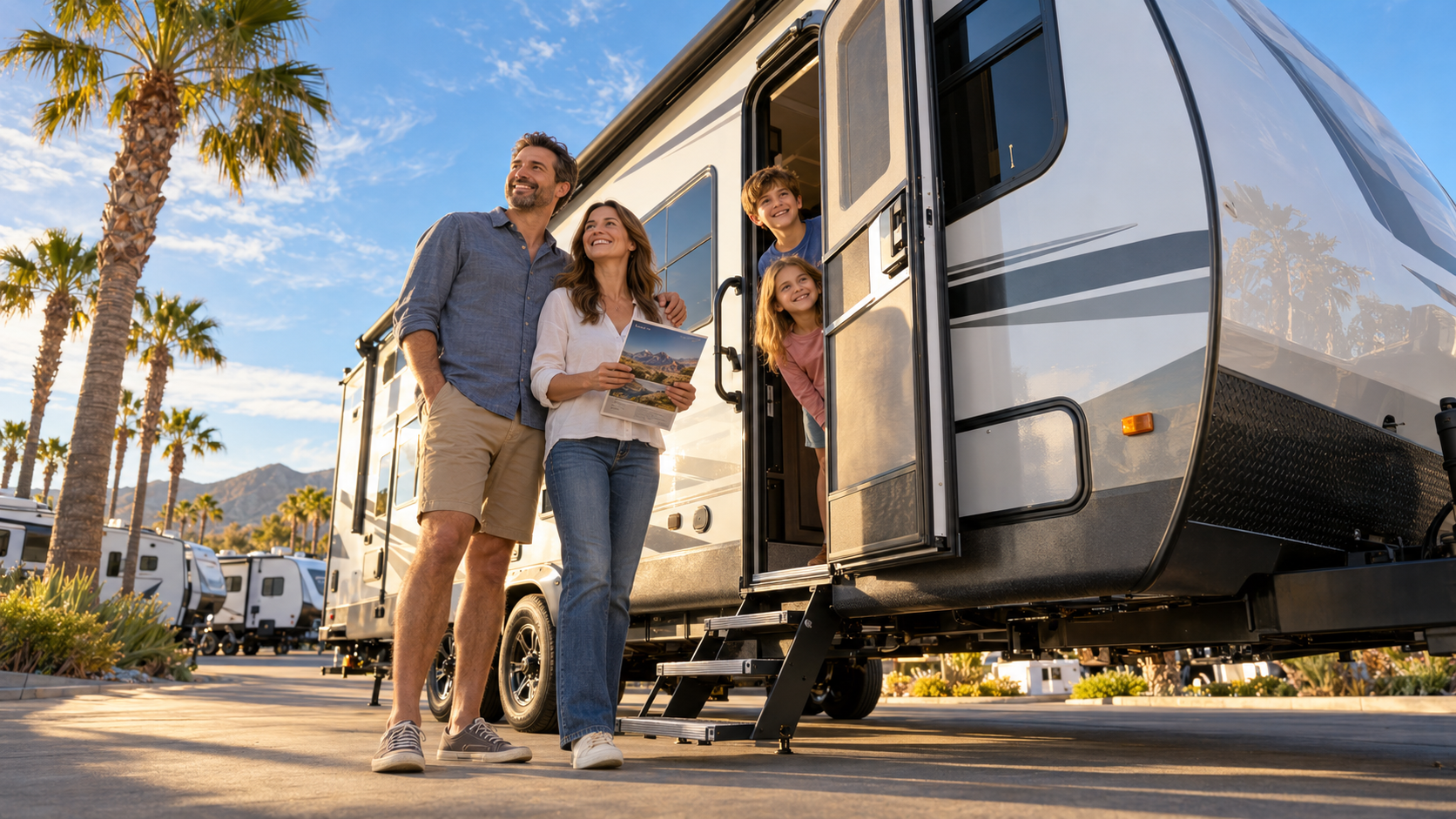
Can a Family of 4 Live in an RV? A Practical Guide for Two-Kid Families
Can a Family of 4 Live in an RV? Here's What You Need to Know
Yes, a family of 4 can absolutely live in an RV full-time. Many American families do it successfully, trading a fixed address for more travel, lower living costs, and intentional time together. The key is choosing the right RV type and floor plan, building a realistic budget, and going in with clear expectations about what daily life actually looks like in a smaller shared space.
What Does Full-Time RV Living Actually Look Like for a Family?
Full-time RV living means your RV is your primary residence, not a vacation rig you pull out a few weekends a year. For a family of 4, that typically means two adults and two children sharing anywhere from 200 to 400 square feet every single day.
It is a meaningful lifestyle shift, and families who make it work tend to share a few common traits:
They value experiences and flexibility over square footage
They plan routes and campground reservations in advance
They build consistent daily routines that work in a compact space
They use homeschooling or virtual school programs for the kids
They have a remote income or a location-independent business
This lifestyle is not the right fit for every family, and that is completely fine. But for families who want to explore national parks, spend more time outdoors, and break the cycle of a high mortgage or rising rent, full-time RV living is a genuinely practical option, not just a social media dream.
What Type of RV Works Best for a Family of 4?
The RV type you choose matters more than almost any other single decision when you are living with four people. Here is how the main options compare:
Class A Motorhome — Best for families wanting maximum space. Typically 30 to 45 feet long. Offers large floor plans and residential-feel amenities, making it the roomiest option available.
Class C Motorhome — Best for families new to full-timing. Typically 24 to 35 feet long. Easier to drive than a Class A and often available with bunk-over-cab layouts that work well for kids.
Fifth Wheel — Best for budget-conscious families who own a pickup truck. Typically 28 to 42 feet long. Offers taller ceilings and more living space per dollar than most motorhomes, with a residential feel that holds up well over time.
Travel Trailer — Best for families who want vehicle flexibility. Typically 20 to 40 feet long. You can unhook at a campsite and use your tow vehicle for day trips, and the price range is wider than any other category.
Toy Hauler — Best for active families with recreational gear. Typically 24 to 43 feet long. The rear garage area stores bikes, ATVs, or bulky outdoor equipment while still providing full living amenities at the front.
For most families of 4, a fifth wheel or a Class C motorhome with a bunkhouse layout is the sweet spot. Fifth wheels offer more vertical living space and typically include dedicated bedroom slides, bunk rooms, split-bath layouts, and full-size kitchens. Class C motorhomes give you self-contained living without needing a separate tow vehicle.
Travel trailers are also popular with families who want the flexibility of unhooking at a campsite and using their truck for day trips. They tend to be more affordable upfront, and many manufacturers build floor plans specifically for families with bunk beds and dual-entry bath setups.
Sky River RV carries an extensive selection of fifth wheels, Class C motorhomes, and travel trailers, including many floor plans built with families in mind.
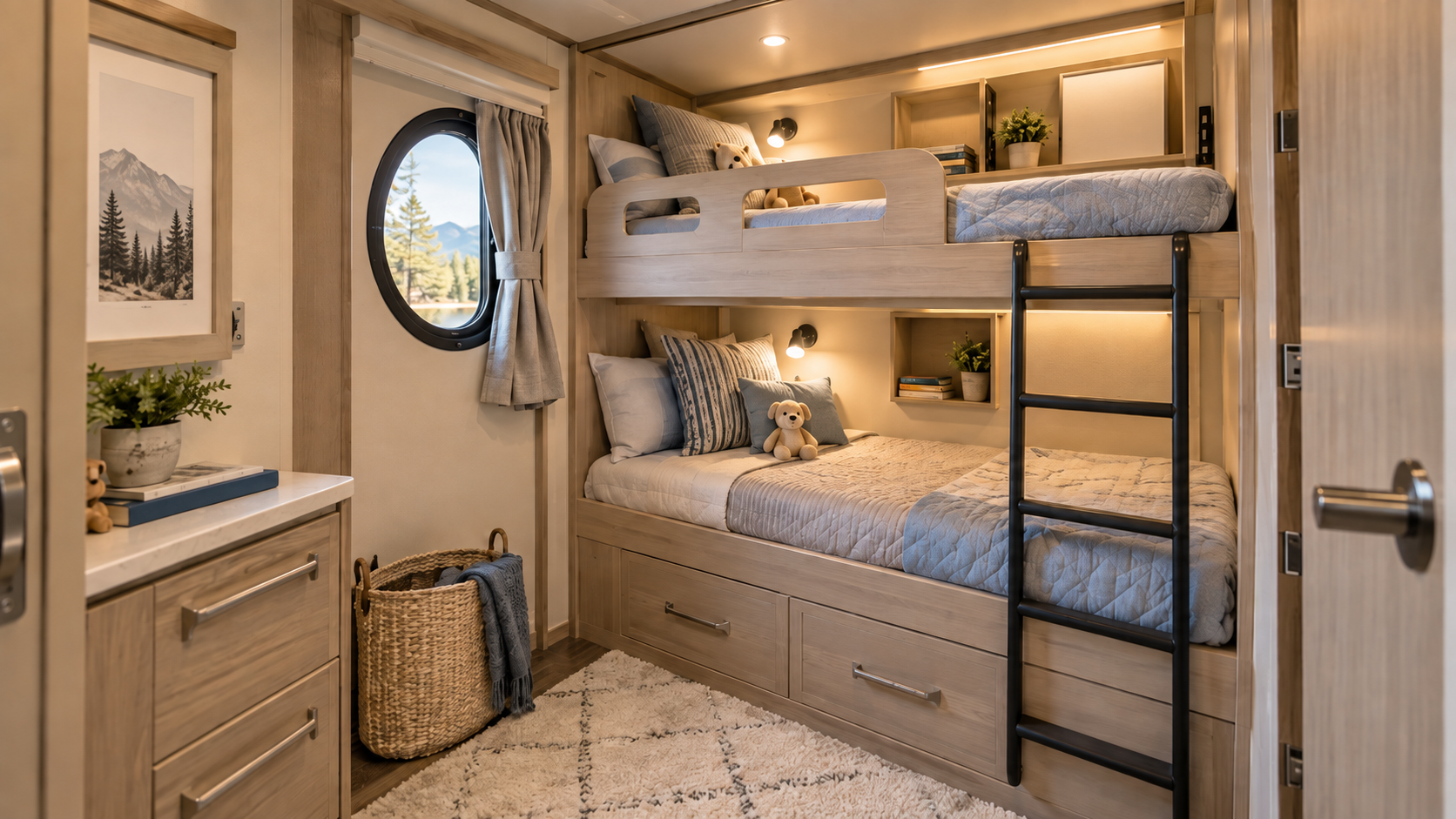
What Features Should a Family RV Have?
When you move from occasional camper to full-time resident, the features that matter most shift considerably. Here is what experienced full-timing families consistently prioritize:
Dedicated bunkhouse sleeping area for kids
A separate bunk room at the rear of the unit keeps the kids' space distinct from the parent bedroom. This is one of the most impactful floor plan features for day-to-day family harmony.
Two bathrooms or a split-bath layout
A half-bath near the kids' bunk area and a full bath near the master suite makes mornings dramatically easier. Full-timing families with teenagers especially value this setup.
Full-size kitchen appliances
Cooking every meal at home becomes a serious daily task on the road. Prioritize full-size ovens, larger refrigerators, and usable counter space over decorative features you will rarely use.
Multiple slide-outs
Slides dramatically expand the usable living area when parked. Units with two or three slides, particularly in the main living area, feel significantly larger than their closed dimensions suggest.
Dedicated workspace or large dinette
If kids are doing school from the RV, you need dedicated table space. A large dinette or designated desk area keeps schoolwork from taking over the entire living room.
Outdoor kitchen and awning
An awning and outdoor living space extend your effective living area in good weather, which matters enormously when you live in California's generally mild climate year-round.
How Much Does It Cost for a Family to Live in an RV?
This is one of the most common questions families ask, and the honest answer is that costs vary significantly depending on your lifestyle and where you park. A general monthly budget range for a family of 4 looks like this:
Campground and RV park fees: $400 to $1,500 per month depending on location and hookup type
Fuel: $200 to $600 per month depending on how frequently you move
Groceries: $600 to $1,000 per month, similar to a traditional household
RV loan payment: $300 to $900 per month depending on the unit and loan terms
RV insurance: $100 to $300 per month for full-timer coverage
Maintenance reserve: $100 to $300 per month is a reasonable monthly buffer
Activities, memberships, and education: $100 to $400 per month
Many full-timing families report their overall monthly expenses drop noticeably after selling or vacating a traditional home. The biggest variable is campground costs. Families who mix state parks, boondocking on public land, and memberships like Harvest Hosts or Thousand Trails can reduce accommodation costs significantly.
If you are purchasing your first full-time RV, explore financing options at Sky River RV to see what works for your situation. Getting pre-approved before you shop helps narrow down floor plans that fit both your family and your monthly budget.
What Are the Biggest Challenges of Family RV Living?
A useful guide to this topic does not skip the hard parts. Here are the real challenges families face:
Limited personal space
Four people sharing 300 to 400 square feet requires intentional habits and honest conversations about privacy. This challenge intensifies as children get older.
Ongoing RV maintenance
An RV used as a full-time home takes on more wear than one used occasionally. Roof seals, slide mechanisms, water systems, and appliances all need regular attention. Sky River RV's service department can handle scheduled maintenance and unexpected repairs.
Reliable internet access
Remote work and virtual schooling both depend on consistent connectivity. Most full-timing families use a combination of cellular data plans, signal boosters, and campgrounds with reliable Wi-Fi.
Socialization for children
Full-timing families typically solve this through homeschool co-ops, RV family groups online and in person, and intentionally planning stops in areas with community events and activities.
Campground availability at peak times
Popular destinations, especially California state parks and coastal campgrounds, fill up fast in summer. Flexibility in your route and booking several weeks in advance are essential habits.

What Are the Real Benefits of Raising Kids on the Road?
Families who stick with full-time RV living long-term consistently point to the same rewards:
More meaningful family time. Without long commutes and the pull of a fixed routine, families report spending far more time together doing things that actually matter to them.
Real-world education. National parks, historical sites, working farms, coastlines, and diverse communities across the country provide learning experiences no textbook can replicate.
Intentional spending. Space limitations naturally cut impulse buying and accumulated clutter. Families tend to spend more on experiences and less on things.
Schedule flexibility. No location requirement means traveling off-peak, chasing good weather, and avoiding crowded seasons, which is especially valuable across California.
Stronger family bonds. Living in close proximity with clear shared goals tends to build communication habits and closeness that families consistently value in retrospect.
How Sky River RV Can Help Your Family Get Started
Sky River RV serves families across California from four locations: Fresno, Paso Robles, Pismo Beach, and Santa Maria. If you are seriously considering full-time RV living for your family, the most valuable step you can take is walking through actual units. Floor plans that look spacious in a brochure can feel very different in person, and the reverse is also true.
Browse new RV inventory to see current family-friendly options from manufacturers including Grand Design, Jayco, Keystone, Forest River, and Winnebago. If budget is a primary factor, used RVs can offer excellent value, particularly for families who want to test full-time living before fully committing.
The team at Sky River RV can walk you through bunkhouse floor plans, tow capacity requirements for fifth wheels and travel trailers, and RV financing options that work for your family. If you already own an RV, a trade-in toward a larger, more livable unit is a straightforward path to the right setup.
Frequently Asked Questions
What is the minimum RV size for a family of 4 to live in full-time?
Most full-timing families of 4 find that 30 feet is close to the practical minimum for comfortable daily living. Units under 28 feet can feel cramped when everyone is inside at the same time, particularly during bad weather days. Length alone does not determine livability, though. Floor plan layout matters just as much. Look for at least two slides and a dedicated bunk area regardless of overall length.
Is it legal to live in an RV full-time?
Full-time RV living is legal in the United States, though there are some practical nuances. Many RV parks and campgrounds prohibit permanent residency, which is why most full-timers move on a regular basis rather than parking indefinitely in one place. Establishing a legal domicile, a state where you register vehicles and maintain a mailing address, is an important step. South Dakota, Texas, and Florida are popular choices because of their favorable laws for nomadic residents.
How do kids go to school while living in an RV full-time?
Most full-timing families use parent-led homeschooling, an online or virtual charter school, or a combination of both. Many states allow families to register as homeschoolers without being tied to a local school district. Organized homeschool co-ops and traveling family communities provide structured socialization opportunities, and many full-timing kids develop strong self-directed learning habits from the experience.
Can a family live in an RV year-round in California?
California's climate makes year-round RV living very manageable across most of the state. The Central Coast, including areas near Pismo Beach and Santa Barbara, offers mild temperatures throughout the year. Inland areas like the Central Valley can experience hot summers, which makes a well-functioning RV air conditioning system essential. California's state parks, national forests, and private campgrounds provide ample year-round options for families who want to stay within the state.
What is the best RV brand for full-time family living?
Several manufacturers build products specifically suited to full-time use with families. Grand Design, Jayco, Forest River, and Keystone all offer bunkhouse floor plans built for extended living with above-average structural quality. When evaluating any brand for full-timing, prioritize floor plan functionality, materials quality, and dealer service network coverage. A dealer connected to warranty support across the country matters significantly when you live on the road.
How do you manage RV maintenance while living in it full-time?
Full-time RV maintenance should be treated more like maintaining a primary home than maintaining a recreational vehicle. Inspect roof seals every three to six months, monitor water system connections regularly, keep tires properly inflated and on a replacement schedule, and check slide mechanisms and seals at each location change. Building a monthly maintenance reserve into your budget avoids being caught off guard by repairs. Sky River RV's service department supports scheduled maintenance and unexpected repairs for full-timing families in California.
How much should a family budget for an RV intended for full-time living?
For full-time family use, most buyers look at units in the $45,000 to $120,000 range depending on type and features. Fifth wheels in the mid-to-upper end of that range typically offer the most livable space per dollar for families. Used units in solid condition can be excellent starting points, often ranging from $25,000 to $70,000 depending on age and mileage. Calculate the total monthly cost of ownership, including loan payment, insurance, campground fees, maintenance, and fuel, not just the purchase price when deciding what makes financial sense.
Final Takeaway
A family of 4 can live in an RV full-time, and thousands of families across the country do it successfully and happily. The keys are choosing a floor plan that genuinely fits four people's daily lives, setting a realistic budget that accounts for all the costs involved, and approaching the lifestyle adjustment with patience and honest communication.
If you are ready to see what family-friendly RVs actually feel like in person, visit Sky River RV at any of our California locations. Browse the full inventory, ask to walk through bunkhouse floor plans built for families, or get started with RV financing to understand what fits your budget. The road is out there, and for a lot of families, it turns out to be exactly the right place to be.