
Can a Family of 4 Live in an RV? Full-Time Living Guide
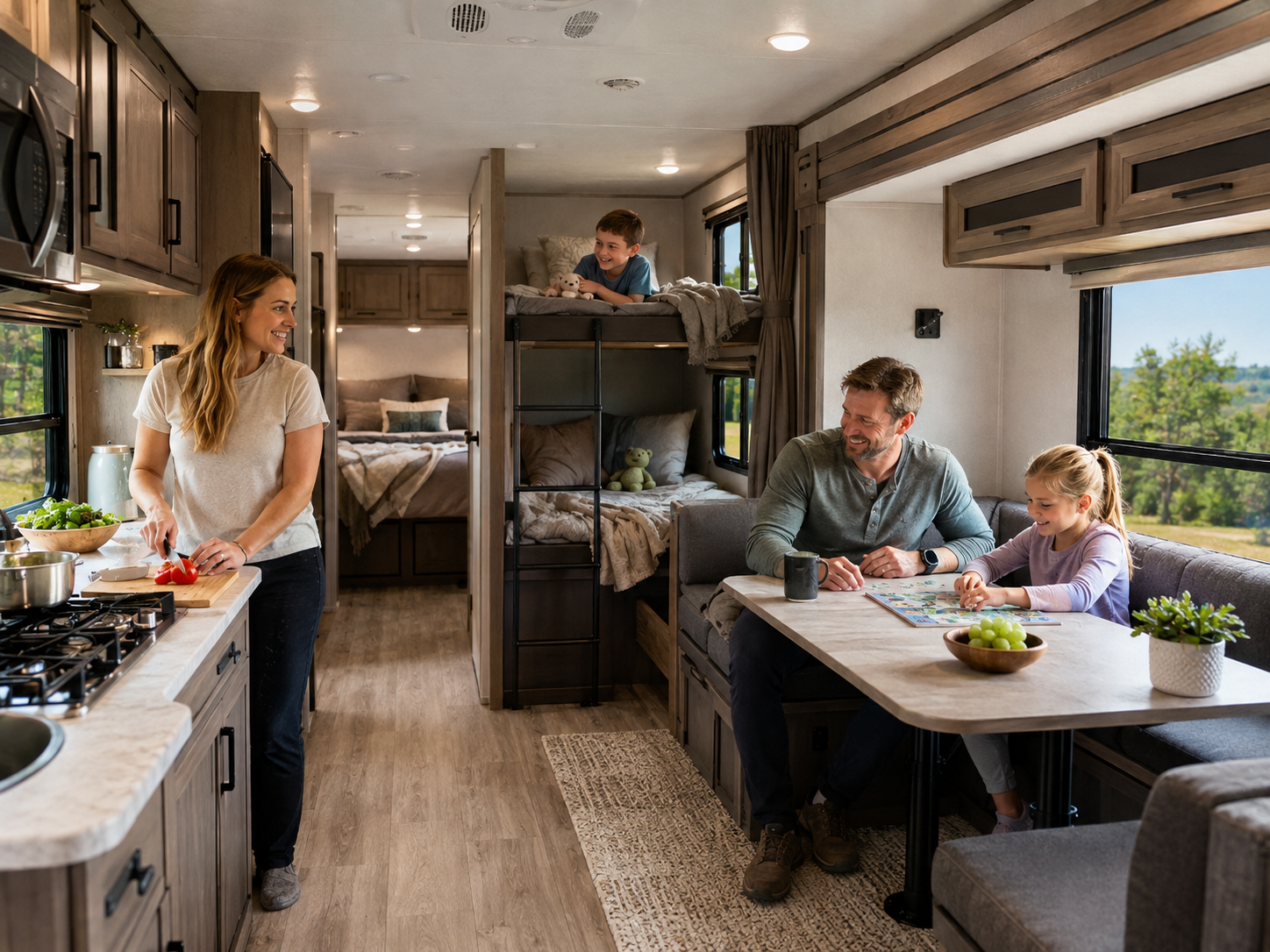
Yes, a family of 4 can live in an RV, and the right floorplan can make full-time RV living surprisingly practical. Families already use RVs as their primary living space while traveling, working remotely, and educating children on the road.
The bigger question isn't whether four people can fit inside an RV. It's whether the RV provides enough sleeping space, privacy, storage, kitchen capacity, workspace, and everyday comfort for your family's lifestyle.
A weekend camper and a full-time family RV have very different requirements. Here's what to consider before making the move.
What Type of RV Is Best for a Family of 4?
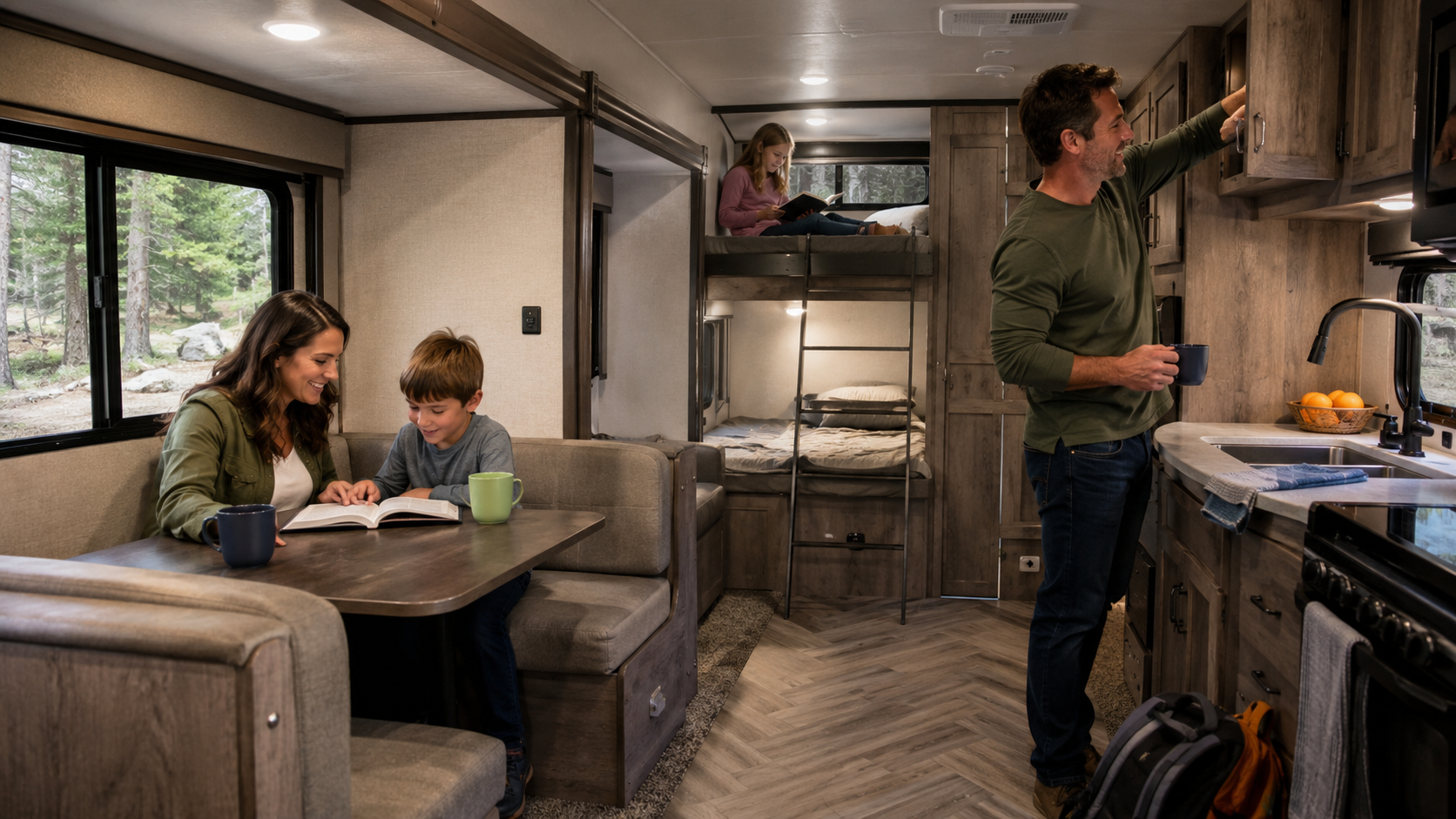
For most families of four, a bunkhouse travel trailer or fifth wheel is an excellent place to start.
Travel trailers come in a wide range of layouts and can include private bedrooms, kitchens, bathrooms, slide-outs, storage, and dedicated bunk beds for children. Sky River RV's current travel trailer selection includes layouts designed to sleep families of four and larger groups.
Bunkhouse Travel Trailer
A bunkhouse travel trailer works particularly well when parents want a separate sleeping area and each child needs a permanent bed.
Look for a layout with:
A private or semi-private parent bedroom
Two dedicated bunk beds
A comfortable dinette
A full bathroom
Pantry and kitchen storage
Exterior storage compartments
A slide-out for additional living room
Go RVing notes that many travel trailers provide private bedrooms, extra storage, full-size showers, and bunk-bed configurations suitable for families.
The advantage of permanent bunks is simple: you don't need to convert the dinette or sofa into beds every night.
Is a Fifth Wheel Better for Full-Time Family Living?
For families who expect to spend significant time inside their RV, a fifth wheel can provide additional living space and separation.
Fifth wheels commonly feature larger living areas, private bedrooms, substantial storage, residential-style kitchens, and family-friendly bunkhouse configurations. Sky River RV currently offers fifth wheels across its California dealership locations, including family-oriented layouts.
A fifth wheel may make sense if your family wants:
More privacy
Larger kitchen space
Additional storage
Separate sleeping areas
More room for school or remote work
A layout suited to extended campground stays
Keep in mind that a fifth wheel requires an appropriately rated pickup truck and hitch. Your tow vehicle's actual payload and towing limits need to match the RV after passengers, cargo, water, and equipment are considered.
How Much Space Does a Family of Four Need?
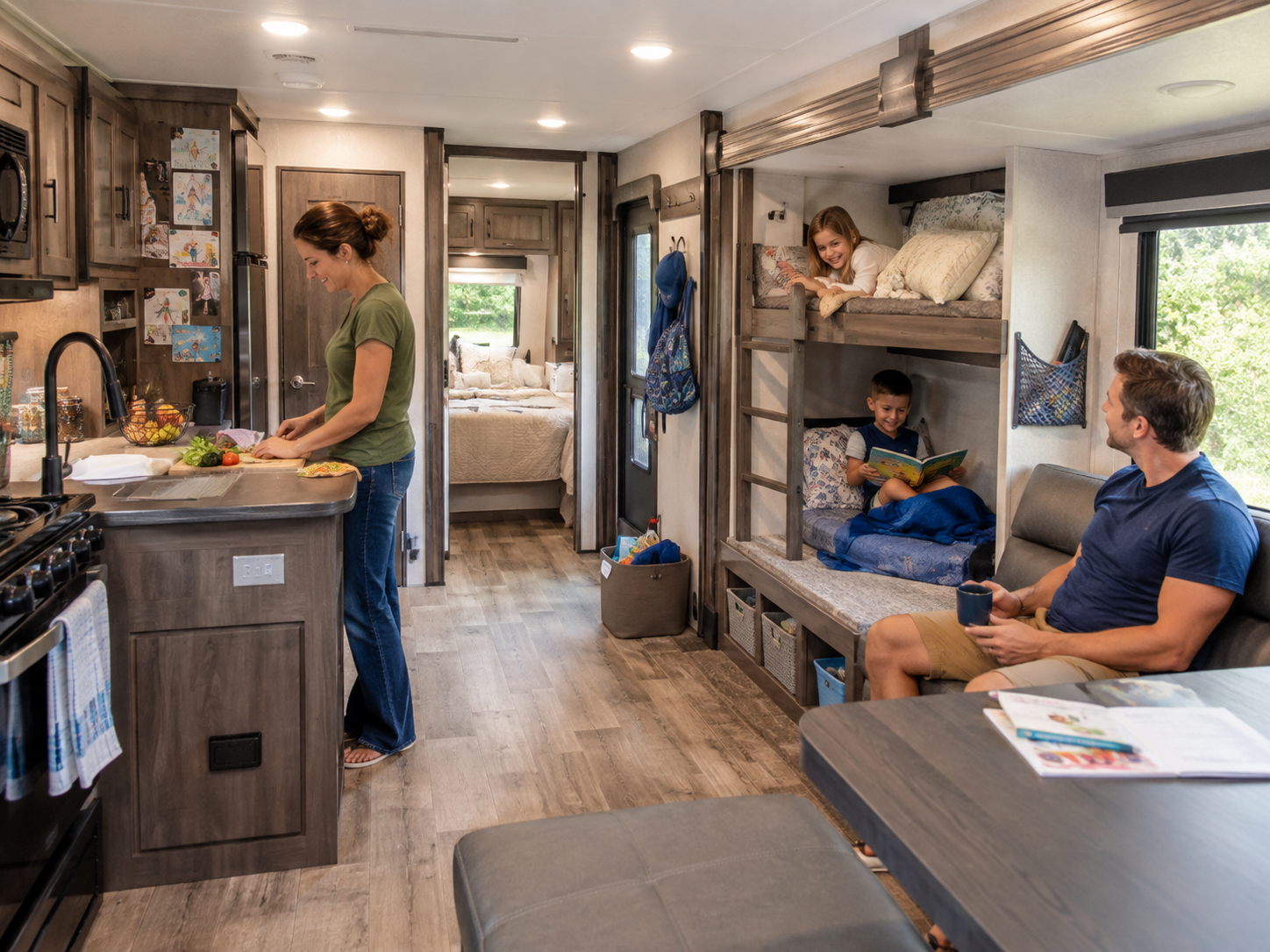
Don't choose an RV simply because the specification says “sleeps four.”
An RV that technically sleeps four may rely on converting the dinette or sofa every evening. That can work for a vacation, but it becomes less convenient when you're living in the RV every day.
For full-time use, prioritize four genuinely usable sleeping spaces.
A practical setup is often a permanent bed for the parents plus dedicated bunks for the children. This gives each person a predictable place to sleep while keeping the main living area functional after bedtime.
Expert Tip: When viewing an RV, have all four family members stand inside together. Open the refrigerator, bathroom door, cabinets, pantry, and bedroom doors. Then imagine preparing breakfast while the kids get ready. This reveals floorplan problems much faster than looking at photos.
Storage Becomes Extremely Important
Living in an RV requires careful organization.
Four people's clothing, shoes, school materials, electronics, outdoor equipment, kitchen supplies, bedding, toiletries, and recreational gear can overwhelm a poorly designed RV quickly.
Look for:
Under-bed storage
Individual wardrobes
Pantry cabinets
Overhead storage
Exterior pass-through compartments
Storage beneath dinette seating
Dedicated shoe and laundry areas
The goal isn't just having more cabinets. Every frequently used item should have a practical place to go.
What About Schooling While Living in an RV?
Families traveling full time need an education plan for school-age children.
Some families homeschool, while others use online or remote education programs. Requirements for home education vary by state, including rules involving registration, assessments, and other legal requirements. The U.S. Department of Education maintains state-specific resources for families researching these requirements.
Your RV should also provide somewhere children can concentrate.
A dinette can become a school desk during the day, while a bunk room or secondary living area may provide a quieter option in larger RVs.
Reliable internet access may also be important for online classes, remote work, banking, campground reservations, and everyday communication.
Think About Privacy, Not Just Space
A family of four doesn't necessarily need an enormous RV, but everyone needs some personal space.
Children may be happy sharing a bunk area when they're young. As they get older, privacy can become much more important.
Parents also need somewhere to talk, work, or relax without turning every part of the RV into a shared family space.
This is one reason layouts with separate bedrooms, bunks, doors, curtains, or divided living zones often work better for long-term family RV living than completely open floorplans.
Don't Ignore Everyday RV Maintenance
When four people live in an RV full time, plumbing, electrical systems, appliances, HVAC equipment, water systems, and other components receive regular use.
Roof seals, tires, batteries, plumbing, slide-outs, heating and cooling systems, and safety equipment should all be checked regularly.
Sky River RV provides RV service support through its Paso Robles, Pismo Beach, and Santa Maria locations.
Keeping up with maintenance is much easier than dealing with an unexpected plumbing or electrical problem when the RV is also your family's home.
Try RV Living Before Committing Full Time
Before making a permanent change, consider taking a longer RV trip.
Spend several weeks using the RV as though you were already living in it full time.
Pay attention to:
Where everyone sleeps
Whether the bathroom feels practical
How quickly storage fills up
Where children study or play
Whether parents have enough privacy
How much cooking space you actually use
How often everyone gets in each other's way
Your family may discover that you need a bunkhouse, another slide-out, more storage, or simply a different layout.
Finding the Right Family RV at Sky River RV
So, can a family of 4 live in an RV? Absolutely, but choosing the right RV matters far more than simply finding something capable of sleeping four people.
Sky River RV offers travel trailers, fifth wheels, destination trailers, Class C motorhomes, and other RV options through locations in Paso Robles, Pismo Beach, Santa Maria, and Fresno, California.
For most full-time families of four, start by looking for dedicated sleeping spaces, generous storage, a comfortable bathroom, a functional kitchen, and enough separation for everyone to have some personal space.
The best RV for a family of four isn't necessarily the largest one. It's the RV whose floorplan makes everyday family life comfortable.
Key Takeaways
A family of four can live in an RV full time with proper planning.
Bunkhouse travel trailers are strong choices for families with two children.
Fifth wheels can provide additional living space, storage, and privacy.
Dedicated beds are more practical than converting furniture every night.
Storage and organization become critical during long-term RV living.
Families with school-age children should research the education requirements that apply to them.
Test the lifestyle with an extended RV trip before committing to full-time living.
FAQS
Can a family of 4 comfortably live in an RV?
Yes. A well-designed bunkhouse travel trailer, fifth wheel, or larger motorhome can provide sleeping areas, a kitchen, bathroom, storage, and living space for four people. The floorplan matters more than simply choosing an RV rated to sleep four.
What is the best RV for a family of 4 to live in?
A bunkhouse travel trailer is a strong option for many families because it can give parents a separate bed while children have dedicated bunks. Families wanting additional room and privacy may prefer a bunkhouse fifth wheel.
How many beds should an RV have for a family of four?
Ideally, parents should have a permanent bed and the children should have dedicated sleeping spaces. This avoids converting your main dining or living area into beds every evening.
Can kids live in an RV full time?
Yes, but parents should plan for education, sleeping arrangements, privacy, recreation, social interaction, and the practical requirements of everyday life. State requirements for home education differ, so families should verify the rules that apply to their situation.
Is a travel trailer or fifth wheel better for a family of 4?
A travel trailer is often easier for families who want a broad choice of layouts and sizes. A fifth wheel may be preferable when additional living space, storage, privacy, and longer stays are priorities.
Can a family of 4 live in an RV year-round?
Families can use RVs for extended or full-time travel, but where an RV may be occupied long term can depend on campground policies and local zoning or occupancy rules. Check the requirements for the specific places where you intend to stay.