
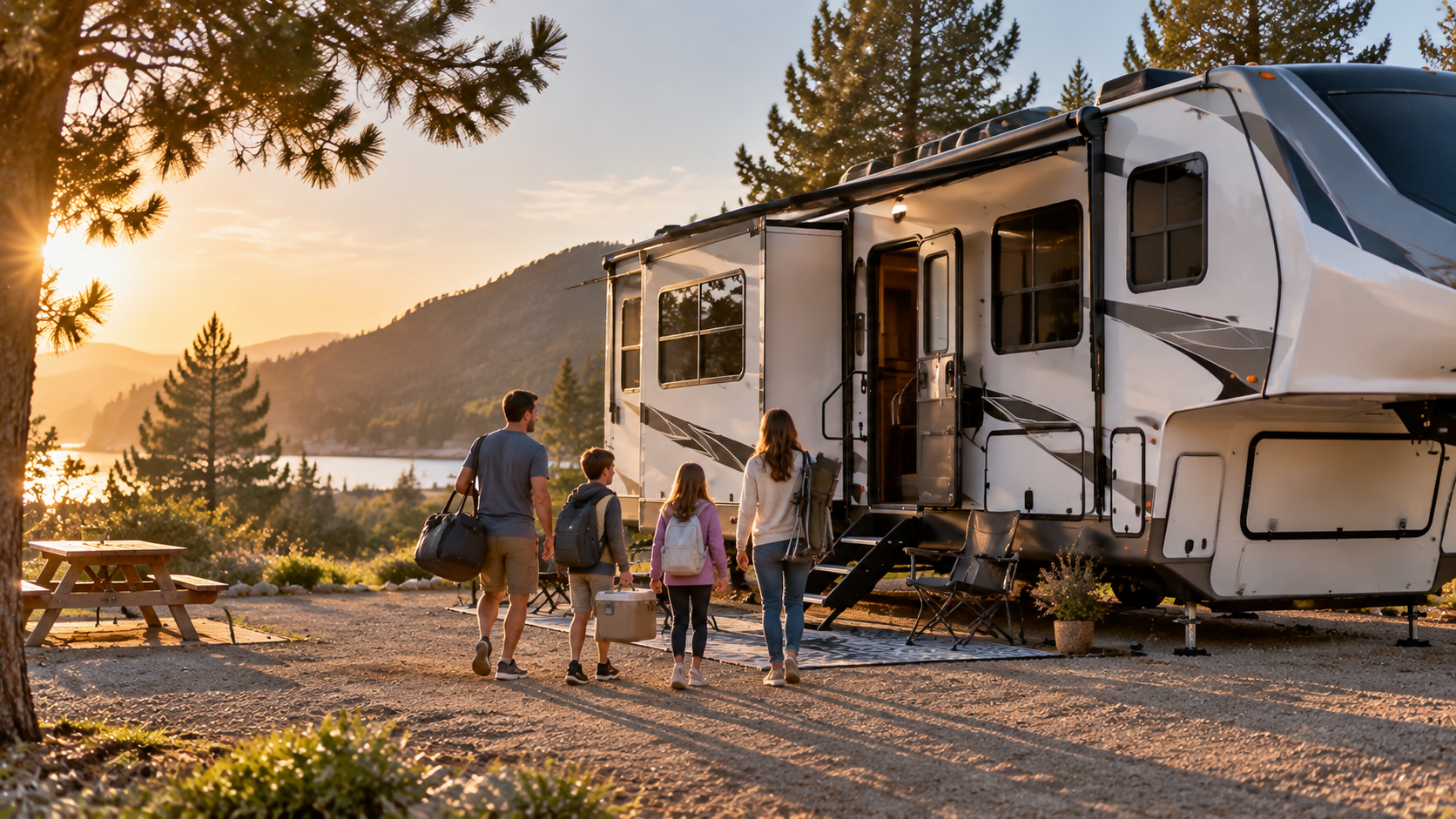
Can a Family Legally Live in an RV Full-Time?
Can a Family Legally Live in an RV Full-Time?
Yes, a family can legally live in an RV full-time in most parts of the United States, as long as they follow local zoning laws, choose a legal place to park, and meet requirements like residency address, mail service, and school enrollment rules. There is no federal law against full-time RV living, but rules vary by city, county, and campground, so families need to plan around those local regulations.
Full-time RV living has become a realistic lifestyle choice for families who want more travel, lower housing costs, or simply a different way of life. At Sky River RV, we talk with families every week who are exploring this option, and the legal side of things is almost always their first question. Here is what you actually need to know before making the move.
Is It Legal to Live in an RV Full-Time With Kids?
Yes, it is legal for a family with children to live in an RV full-time in the United States. There is no law that prohibits minors from living in a recreational vehicle. What matters more is where the RV is parked and how the family handles legal requirements like a permanent address, school enrollment, and healthcare access.
Most legal issues around full-time RV living with a family come down to three things: zoning restrictions on where you can park long-term, homeschool or public school enrollment paperwork that requires a fixed address, and campground or community rules about age limits or length of stay. None of these make full-time RV living illegal. They just require some upfront planning.
Families who succeed at this lifestyle typically set up a domicile in an RV-friendly state, use a mail forwarding service, and choose campgrounds or RV parks that allow extended stays. This keeps the family within the law while still enjoying the freedom of full-time travel.
What Are the Zoning and Parking Rules for Full-Time RV Living?
Zoning laws control where you can legally park and live in an RV, and these laws differ significantly between cities, counties, and states. Some areas allow long-term RV living on private property, while others restrict it to designated RV parks or campgrounds only.
Here is what typically affects where a family can legally live in an RV:
City and county zoning ordinances that restrict residential RV parking on private land
Homeowners association (HOA) rules that ban RVs entirely, even temporarily
State laws on how many consecutive days you can stay in one campground or RV park
Public land rules, such as BLM land, which often caps stays at 14 days before you must move
Private RV parks and resorts, which usually allow longer stays but may have their own length-of-stay limits
Before choosing a home base, families should check with the local planning or zoning department in the area they want to park. Many counties allow RV living on land you own if you also have an approved septic or sewer connection, while others require you to be in a licensed RV park.
If you plan to base out of California's Central Coast or Central Valley, it helps to look at parks and RV resorts near Fresno, Bakersfield, or the Paso Robles and Pismo Beach areas, since these regions have a strong mix of long-term RV parks with hookups and family-friendly amenities.
What Should Families Consider Before Moving Into an RV Full-Time?
Families should evaluate space, storage, RV type, budget, and long-term durability before committing to full-time RV living. The right RV for a weekend trip is often not the right RV for daily family life, so this decision deserves real research.
How Much Living Space Does a Family Actually Need?
A family of four typically needs at least 300 to 400 square feet of interior living space to live comfortably full-time, which usually points toward a larger fifth wheel, a toy hauler with a garage that converts to living space, or a Class A motorhome. Smaller travel trailers work for short trips but can feel cramped when a family is living in one every day.
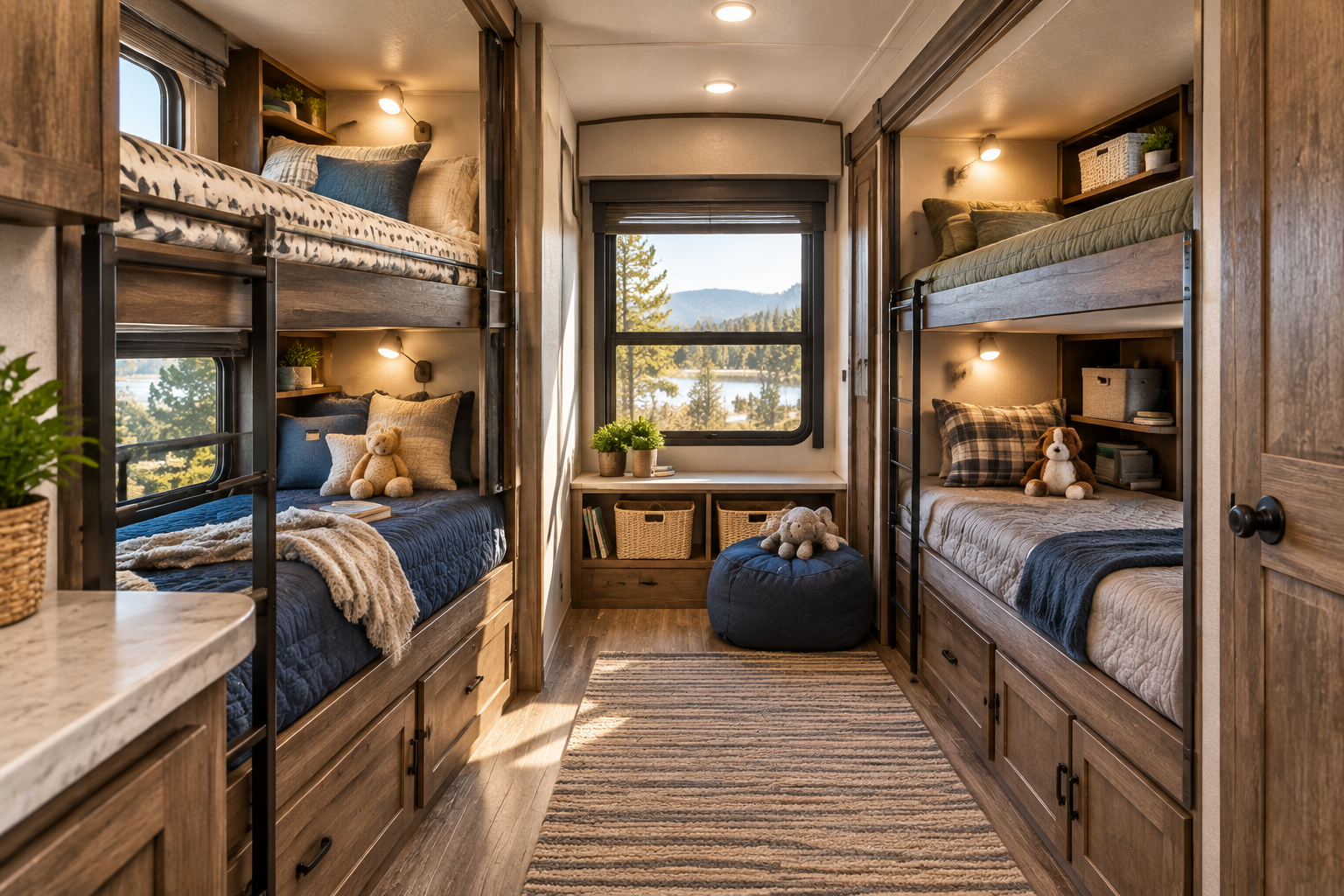
Bunkhouse floorplans are popular with families for a reason. They separate the kids' sleeping area from the main living space, which helps with both privacy and daily routines. When you're comparing units, pay close attention to the number of separate sleeping areas, not just the total square footage.
Which RV Type Works Best for Full-Time Family Living?
Fifth wheels and larger travel trailers with bunkhouse layouts tend to work best for families who plan to stay parked at a home base most of the time, since they offer more square footage per dollar than motorhomes. Motorhomes work better for families who plan to move locations frequently, since there is no separate tow vehicle to hook up and disconnect each time.
A few practical differences worth thinking through:
Fifth wheels and travel trailers cost less per square foot and are easier to service locally, but require a capable tow vehicle
Class A and Class C motorhomes let you drive and live in the same unit, which simplifies frequent moves but often costs more upfront and in maintenance
Toy haulers give growing families extra garage space that can convert into an office, gym, or additional sleeping area
If your family plans to settle into one RV park for months at a time and take occasional trips, a fifth wheel with a bunkhouse is usually the more practical and affordable choice. You can browse current fifth wheels and travel trailers to compare bunkhouse floorplans built for families.
What Should You Check Before Buying an RV for Full-Time Living?
Before buying, families should check the RV's fresh water and holding tank capacity, insulation rating for the climates they plan to live in, storage space, and warranty coverage. Full-time use puts far more wear on an RV than occasional camping, so build quality and after-sale support matter more than they would for a weekend camper.
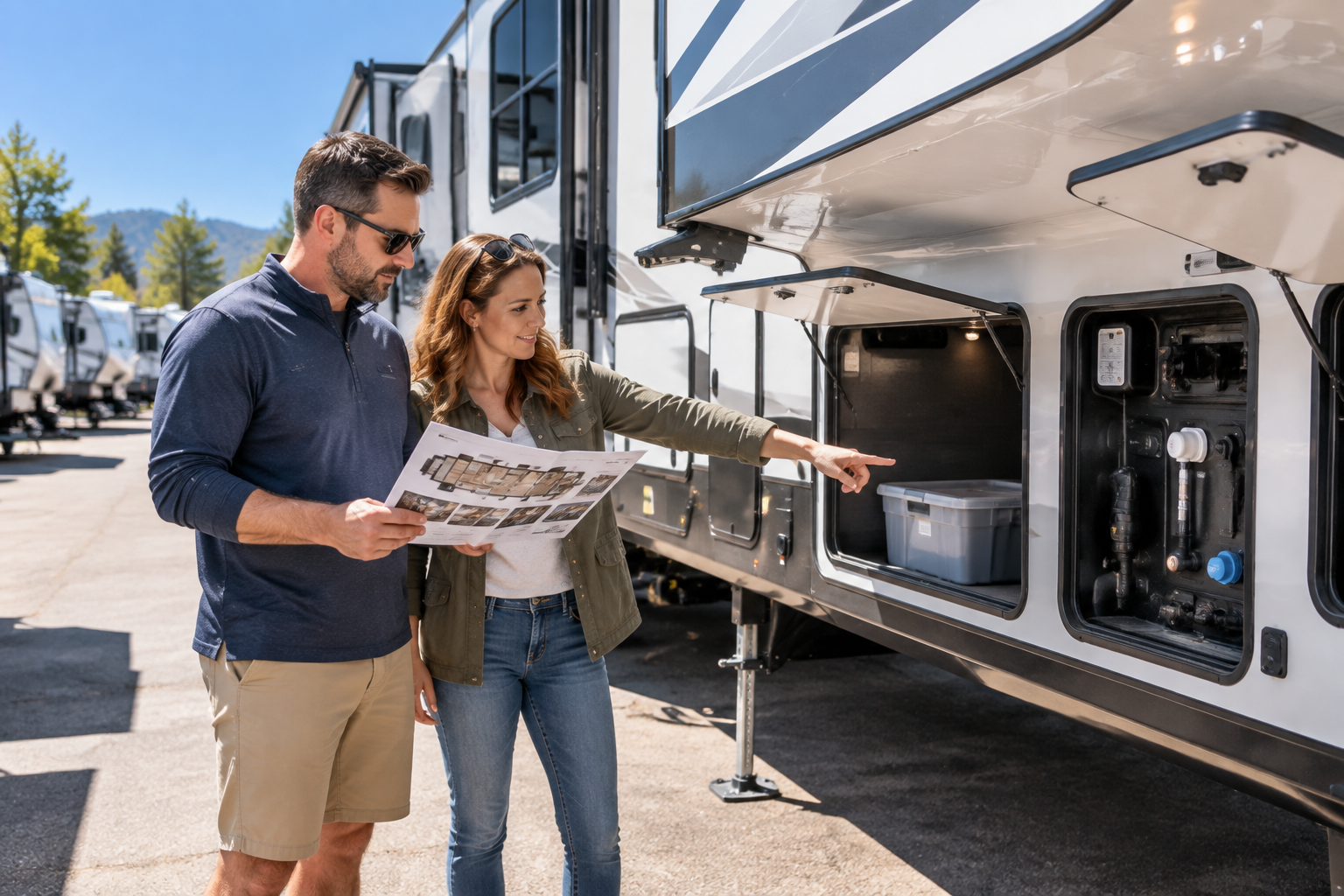
Ask about these specific things during a walkthrough:
Tank sizes for fresh water, gray water, and black water, since full-time living means filling and dumping them constantly
Four-season insulation if you plan to stay in colder climates during winter months
Available basement and cabinet storage for clothes, school supplies, and everyday gear
Manufacturer and dealership warranty coverage, since full-time units need service more often than weekend RVs
What Are Common Mistakes Families Make When Moving Into an RV Full-Time?
The most common mistakes are underestimating storage needs, choosing an RV that's too small for daily life, skipping the legal domicile setup, and not researching zoning rules before committing to a location. These mistakes are avoidable with some planning before the purchase, not after.
A few specific missteps we see often:
Buying based on weekend camping trips instead of daily living needs, then feeling cramped within weeks
Assuming any RV park allows unlimited long-term stays without confirming length-of-stay policies first
Not setting up a legal domicile address, which can create problems with mail, taxes, driver's licenses, and school enrollment
Underestimating monthly costs like RV park fees, propane, maintenance, and insurance on top of the RV payment itself
Skipping a pre-purchase inspection or walkthrough, then discovering maintenance issues after they've already moved in
Taking time to test an RV with a shorter trip before committing to full-time living can prevent most of these issues. It's also worth scheduling a full walkthrough with a knowledgeable RV expert so you understand every system in the coach before you depend on it daily.
How Sky River RV Helps Families Prepare for Full-Time RV Living
Sky River RV works with families across the Central Coast and Central Valley who are considering full-time RV living, and we walk through floorplans, tank capacities, and warranty coverage in detail before any purchase. Our team can help you compare bunkhouse fifth wheels, toy haulers, and motorhomes side by side so you choose a unit that fits your family's daily routine, not just a weekend trip.
We also connect families with financing options built around long-term ownership, and our service department can help you understand ongoing maintenance needs before you're living in the unit full-time. If you already own an RV and are upgrading to something larger for full-time living, our trade-in program makes it easier to move into the right floorplan.
Families in Fresno, Bakersfield, San Jose, Santa Clarita, and along the Central Coast near Pismo Beach, Paso Robles, and Santa Maria can visit one of our locations to see bunkhouse layouts in person and ask questions specific to their planned lifestyle.
Frequently Asked Questions
Can you use an RV park address as your permanent address?
Some RV parks allow long-term residents to use the park's address for mail, but this depends on the individual park's policy and local laws. Many full-time RV families instead use a mail forwarding service based in an RV-friendly state, which also helps establish a legal domicile for taxes, insurance, and vehicle registration purposes.
Do kids living in an RV full-time need to be enrolled in school?
Yes, children living in an RV full-time still need to meet their state's education requirements, whether through public school enrollment, online school, or homeschooling. Requirements vary by state, so families should research the specific rules for their legal domicile state before choosing a schooling approach.
How long can you legally stay in one RV park or campground?
Length-of-stay limits vary by property, with many public campgrounds capping stays at 14 days while private RV parks often allow month-to-month or seasonal stays. Always confirm the specific policy with the park before planning to stay long-term.
Is it cheaper to live in an RV full-time than in a house?
Full-time RV living can be cheaper than traditional housing, but costs depend on RV park fees, fuel, maintenance, and insurance, which can add up. Families who own their RV outright and choose affordable long-term parks often see meaningful savings compared to rent or a mortgage, but it's not guaranteed to be cheaper in every situation.
What size RV is best for a family of four living full-time?
Most families of four do well in a fifth wheel or larger travel trailer with a bunkhouse floorplan, typically in the 35 to 40 foot range, which provides separate sleeping areas and enough storage for daily life. The right size ultimately depends on your specific family's needs and how much time you'll spend parked versus traveling.
Can you get a mortgage or loan for an RV used as a full-time residence?
Yes, many lenders offer RV loans that can be used for full-time residences, and some may even qualify for tax benefits similar to a second home if the RV meets certain requirements. Loan terms and rates vary by lender, so it helps to compare financing options before choosing an RV.
Final Takeaway
Living in an RV full-time as a family is legal and increasingly common, but success depends on understanding zoning rules, choosing the right RV for daily life, and setting up your legal domicile correctly before you hit the road. The families who do this well take time upfront to research parking options, compare floorplans built for full-time living, and choose a unit that can handle daily wear rather than just weekend trips.
If your family is considering this lifestyle, our team at Sky River RV can walk you through bunkhouse fifth wheels, toy haulers, and motorhomes built for full-time use, along with financing and service support to back you up long after the sale. Stop by one of our locations or contact us to start the conversation.