
What Is the Best RV for a Family of 5? Buying Guide
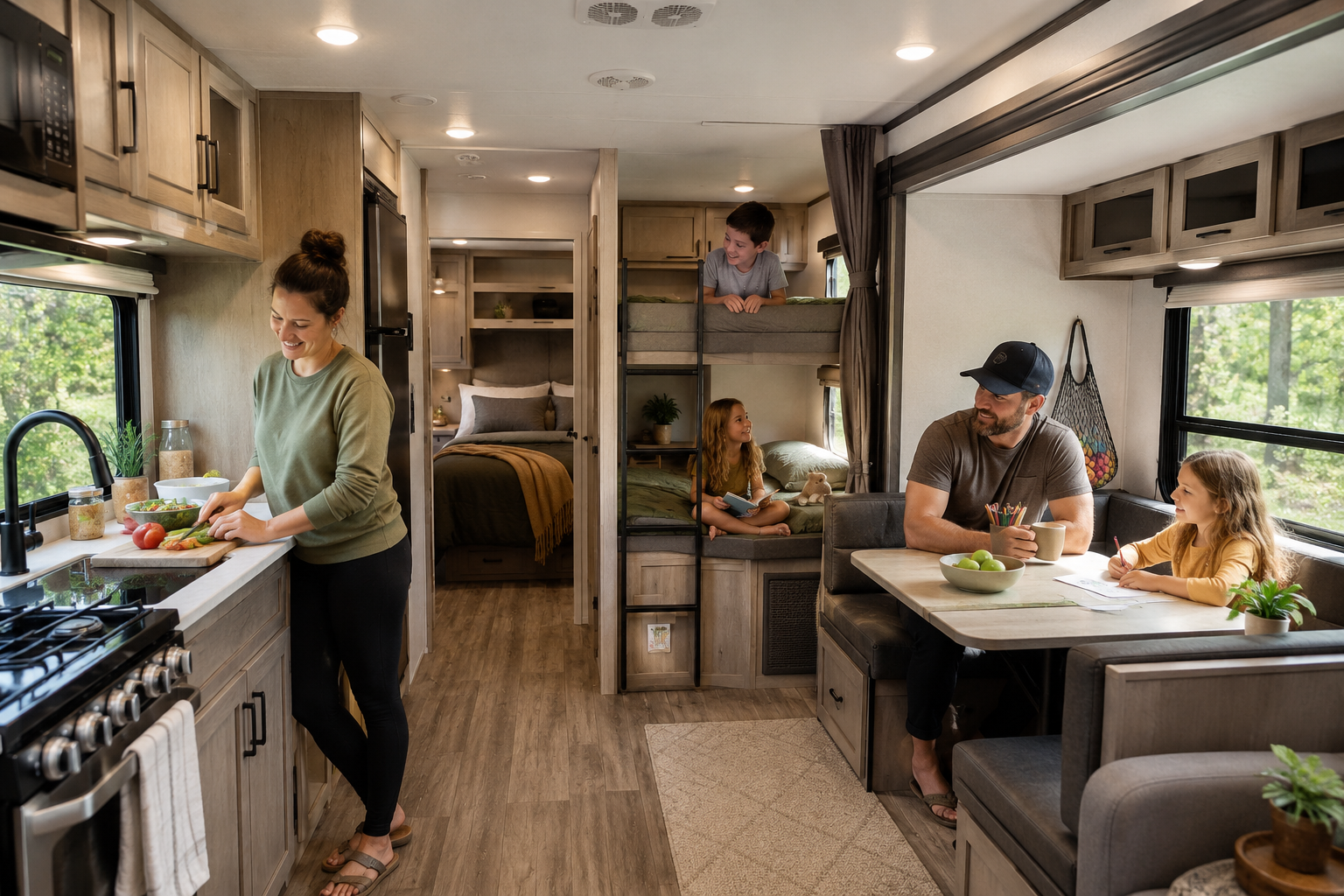
If you're wondering what is the best RV for a family of 5, a bunkhouse travel trailer is often the best overall choice. It gives parents and children dedicated sleeping areas, useful storage, a kitchen and bathroom, and enough living space for family trips without requiring the size of some larger RVs.
That said, there isn't one perfect RV for every family. A Class C motorhome may work better if you prefer a drivable RV, while a bunkhouse fifth wheel can provide more room for extended trips.
The key is choosing an RV based on how your family will actually use it, not simply choosing a model labeled "sleeps five."
Why Bunkhouse Travel Trailers Work So Well for Families of Five
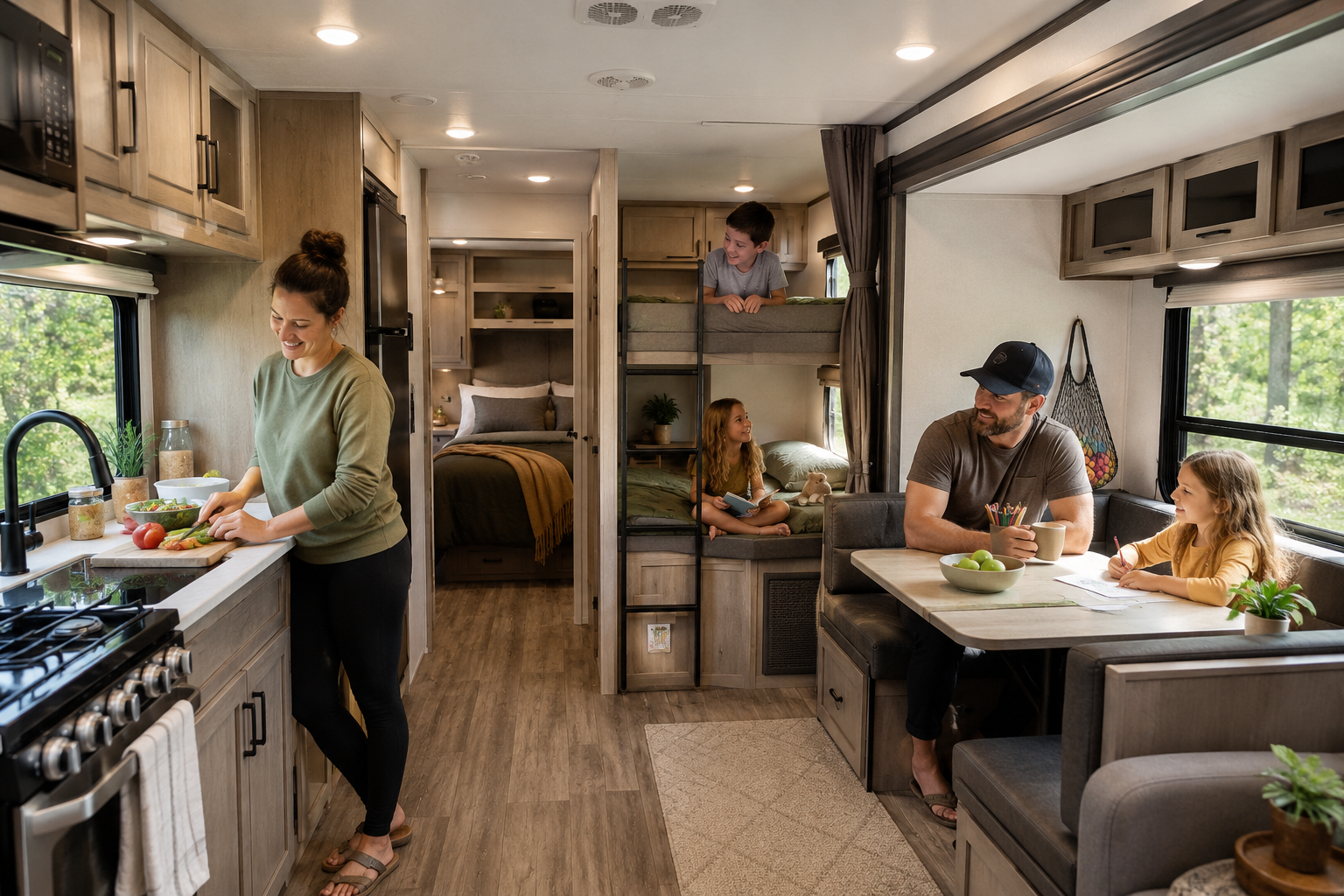
For many families, a bunkhouse travel trailer provides the best balance of sleeping capacity, usable living space, storage, and flexibility.
Travel trailers are available in a wide range of sizes and can offer separate bedrooms, bunk beds, convertible dinettes, full bathrooms, kitchens, and additional storage. Go RVing notes that travel trailers can accommodate larger families and that some models include full-size bunks and separate sleeping areas.
A practical family-of-five layout might include:
A dedicated bed for the parents
Two double-size bunks for the children
A convertible dinette or sofa
A full bathroom
Kitchen storage and pantry space
Exterior storage for camping equipment
A slide-out for additional living room
Sky River RV currently carries family-focused bunkhouse travel trailers with sleeping capacities greater than five, including models such as the Forest River Cherokee Grey Wolf 23DBH, Coachmen Apex Nano 228BHS, and Jayco Jay Feather Air 16DB. Inventory changes regularly, so specifications and availability should always be confirmed before buying.
Don't Choose an RV Based on Sleeping Capacity Alone
An RV advertised to "sleep eight" isn't automatically more comfortable for a family of five than one designed to sleep six.
Look at where everyone actually sleeps.
Convertible dinettes and sofas can provide extra beds, but converting the main living area every evening gets tiring on longer trips. Dedicated bunks allow children to keep their bedding and belongings in one place while parents can still use the living space after bedtime.
For a family with three children, double-over-double bunks can be especially useful. They provide room for growing kids and can prevent the sleeping arrangement from becoming cramped as children get older.
Expert Tip: When touring an RV, have all five family members stand inside at the same time. Open the refrigerator, bathroom door, cabinets, and slide areas. A floorplan that looks spacious in photos can feel very different when everyone is moving around.
Is a Class C Motorhome Good for a Family of 5?
Yes. A Class C motorhome can be one of the best RVs for a family of five, particularly for families who want a motorized RV instead of towing a trailer.
Class C motorhomes often combine a rear or primary sleeping area with a cab-over bed, convertible seating, and sometimes additional bunks. Go RVing lists Class C motorhomes among RV types capable of accommodating larger groups.
Sky River RV's current Class C inventory includes multiple models with sleeping capacities of five or more, demonstrating how widely family-oriented layouts can vary within this category.
A Class C can make sense if your family:
Takes frequent road trips
Prefers driving instead of towing
Wants quick campground setup
Needs multiple sleeping areas
Wants access to RV living space at stops
For motorized RVs, however, sleeping capacity and passenger capacity are not the same thing. Families should verify the number and location of properly equipped seating positions and follow applicable child-restraint and seat-belt requirements. NHTSA requires motorhomes to identify safety-belt-equipped seating capacity, and California requires occupants to use appropriate restraints.
When Is a Fifth Wheel Better for a Family of Five?
Families who prioritize maximum living space and privacy should consider a bunkhouse fifth wheel.
Fifth wheels can offer larger kitchens, additional storage, separate bedrooms, multiple slides, and dedicated bunk rooms. Go RVing specifically notes that fifth wheels can provide private spaces and bunk areas that are useful for children or teenagers.
Sky River RV carries fifth wheels in California, including family-oriented bunkhouse layouts capable of sleeping larger groups.
A fifth wheel may be particularly appealing for:
Longer camping trips
Families with older children
Extended seasonal stays
Families carrying substantial camping gear
Parents who want more bedroom separation
The tradeoff is towing. Fifth wheels require a compatible pickup and hitch setup, so the tow vehicle's ratings need to be considered before selecting the RV.
What Features Should a Family of 5 Look For?
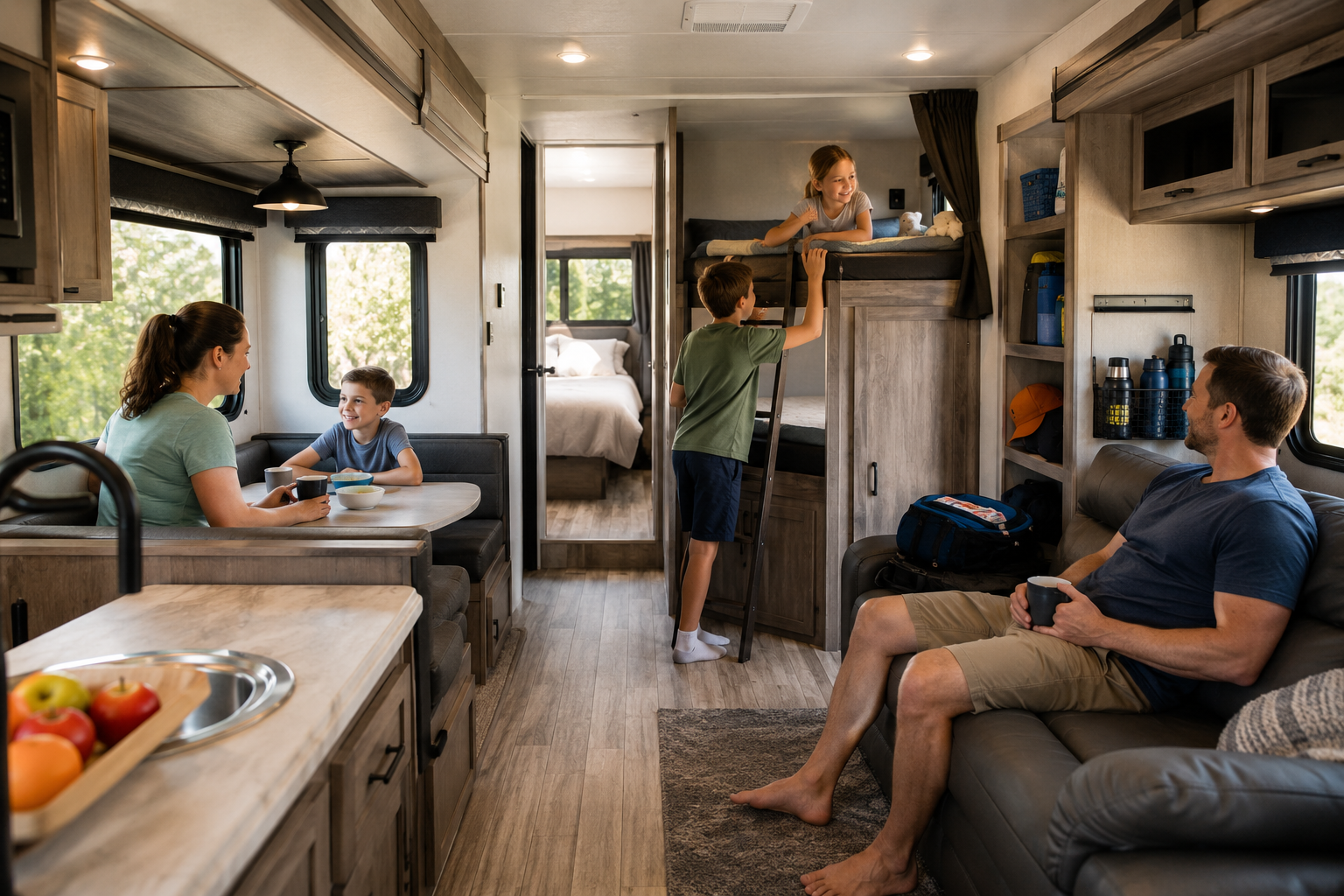
Sleeping space matters, but family comfort often comes down to the small details.
Dedicated Bunk Beds
Bunks give kids their own space without requiring the dinette to become a bed every night.
Enough Storage for Five People
Look for wardrobes, under-bed storage, pantry space, exterior compartments, and designated places for shoes, jackets, toys, and camping gear.
A Functional Bathroom
With five people sharing one RV, bathroom accessibility becomes important. Consider how easily someone can use the bathroom while others are cooking, sleeping, or moving through the RV.
Kitchen and Refrigerator Space
A family of five needs more food storage and meal-preparation space than a couple. Look at counter space, pantry capacity, refrigerator size, and dining arrangements.
Room for Rainy Days
Imagine everyone spending an entire afternoon indoors. A slide-out, comfortable dinette, sofa, or open central living area can make a major difference.
Towing Compatibility
If you're choosing a travel trailer or fifth wheel, don't shop by dry weight alone. The tow vehicle, payload rating, trailer GVWR, hitch weight, passengers, and cargo all need to be considered. California's RV handbook recommends paying close attention to RV load ratings and safe loading.
Should You Buy an RV That Sleeps More Than Five?
Usually, yes.
For a family of five, looking at an RV that sleeps six to eight people can provide valuable flexibility. Extra sleeping capacity gives growing children more room and makes it easier to bring a friend or relative.
More important, it can reduce your dependence on convertible furniture.
Think about how your family may use the RV several years from now. Three young children sharing compact bunks may be comfortable today, but teenagers will appreciate larger sleeping spaces and more privacy.
Finding the Best Family RV at Sky River RV
So, what is the best RV for a family of 5?
For most families, start with a bunkhouse travel trailer that sleeps at least six. It offers a practical mix of dedicated beds, family living space, storage, and flexibility. If you prefer a motorized option, consider a Class C. If interior room and privacy are the priorities, explore bunkhouse fifth wheels.
Sky River RV offers new and used travel trailers, fifth wheels, Class C motorhomes, and other RV options through locations in Paso Robles, Pismo Beach, Santa Maria, and Fresno, California.
When you shop, walk through several floorplans with your entire family. Sit at the dinette, test the bunks, examine the storage, and picture everyone getting ready for bed after a long day outdoors. The best family RV isn't simply the one that can sleep five. It's the one that makes traveling together comfortable.
Key Takeaways
A bunkhouse travel trailer is a strong all-around choice for most families of five.
Look beyond advertised sleeping capacity and evaluate actual beds.
Class C motorhomes work well for families who prefer a drivable RV.
Fifth wheels provide additional living space and privacy.
Dedicated bunks, storage, kitchen space, and a practical bathroom matter on family trips.
Verify towing limits and passenger safety requirements before choosing an RV.
Consider an RV that sleeps six or more so your family has room to grow.
FAQS
What size RV is best for a family of 5?
There is no single ideal length because floorplan design matters as much as overall size. Look for an RV with a permanent parent sleeping area, dedicated bunks for children, a bathroom, useful storage, and enough living space for everyone.
Is a travel trailer good for a family of five?
Yes. Bunkhouse travel trailers are especially well suited to families because they combine dedicated sleeping areas with kitchens, bathrooms, storage, and flexible living spaces.
What is the best RV layout for three kids?
A layout with double bunks or a dedicated bunkhouse is usually one of the most practical options. It gives children individual sleeping space while keeping the main dinette and living area available.
Should a family of 5 buy an RV that sleeps 5 or more?
Choosing a model that sleeps six or more often gives the family more flexibility. Extra sleeping capacity can provide larger bunks, reduce reliance on convertible furniture, and leave space for guests.
Is a Class C or travel trailer better for a family of 5?
Choose a Class C if you prefer a motorized RV and easy campground setup. Choose a travel trailer if you already have an appropriately rated tow vehicle and want a wider variety of family-oriented floorplans.
Are fifth wheels good for families with kids?
Yes. Bunkhouse fifth wheels can provide substantial storage, separate sleeping areas, larger living spaces, and additional privacy, making them particularly attractive for longer trips.